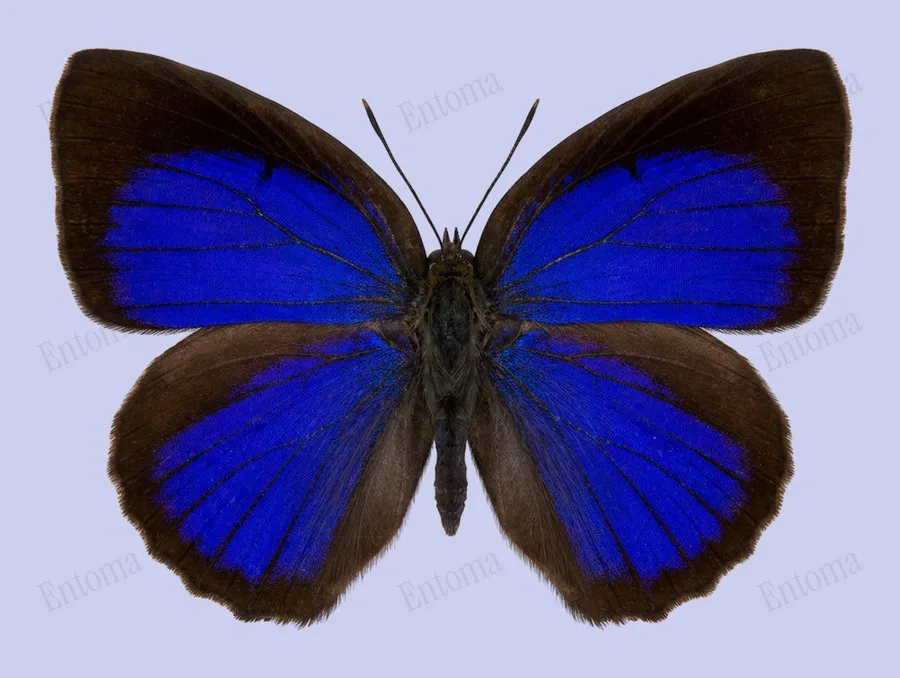
Dull oak-blue
One of the largest oakblues in its genus, this butterfly's caterpillars feed on parasitic mistletoe growing on trees as well as on ordinary garden and forest hosts.
| Where | Gardens, forest edges and mangroves |
|---|---|
| Size | About 48 mm wingspan |
| When | January to December |
The Dull oak-blue is a large lycaenid; males are purplish blue with a very narrow dark forewing border, while females are paler blue with broader black margins, and both sexes show brown undersides marked with silvery green lines outlining the forewing cell spots.
Caterpillars are unusually varied feeders, taking leaves from sea almond and Syzygium trees as well as the parasitic mistletoe Macrosolen cochinchinensis, and adults range from neighbourhood gardens and hill parks to mangroves and forest edges.
Traits
Habitat
Garden
Colour
Blue, Brown
Active
Day
To people
Harmless to handle; adults visit flowers and rest on leaves near their host trees.
Activity through the year
Often confused with
Males are a brighter, more vibrant blue above than the deeper violet blue Dull oak-blue, which also has a narrower dark forewing border.
Questions
Is the Dull oak-blue dangerous to people?
Harmless to handle; adults visit flowers and rest on leaves near their host trees.
When can you see the Dull oak-blue?
The Dull oak-blue can be seen from January to December, by day.
Plate retouched from a museum specimen photo by Swiss Natural History Collections - SwissNatColl, CC BY 4.0, GBIF Licence
Report a mistake in this entry
Butterflies and moths›Blues and coppers›Arhopala
Last updated 2026-09-27. Every entry is checked against published sources.