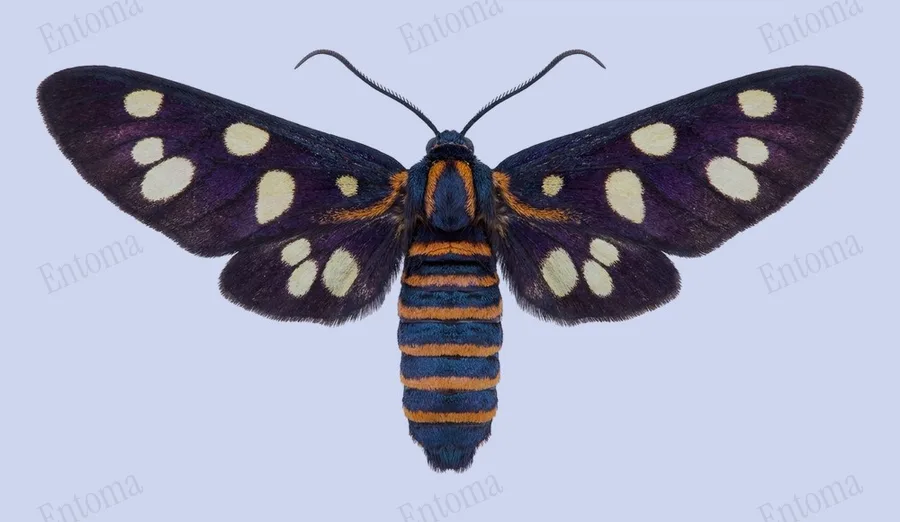
Sandalwood defoliator
This day flying moth mimics a stinging wasp so closely that it is often mistaken for one, yet it has no sting and cannot harm anyone.
| Where | Sandalwood groves, crop fields and gardens |
|---|---|
| Size | 36 to 44 mm wingspan |
| When | January to December |
The Sandalwood defoliator is a black moth with translucent yellow orange spots on both wings and two orange lines across the thorax, a pattern that mimics a stinging wasp and helps deter predators.
Caterpillars feed mainly on sandalwood but also attack cowpeas and other pulses and ornamental plants, breeding continuously through the year with several generations produced in quick succession.
Traits
Habitat
Farmland
Colour
Black, Yellow, Orange
Active
Day
To people
Mimics a stinging wasp in flight and colour but has no sting; harmless to people, though its caterpillars damage sandalwood and other crops.
Activity through the year
Often confused with
Smaller, with a wingspan of about 22 to 24 mm against the Sandalwood defoliator's 36 to 44 mm, and a narrower orange thorax band.
Questions
Is the Sandalwood defoliator dangerous to people?
Mimics a stinging wasp in flight and colour but has no sting; harmless to people, though its caterpillars damage sandalwood and other crops.
When can you see the Sandalwood defoliator?
The Sandalwood defoliator can be seen from January to December, by day.
Plate retouched from a photo by Siya ul haque, CC BY 4.0, iNaturalist Licence
Report a mistake in this entry
Butterflies and moths›Erebid moths›Amata
Last updated 2026-09-27. Every entry is checked against published sources.