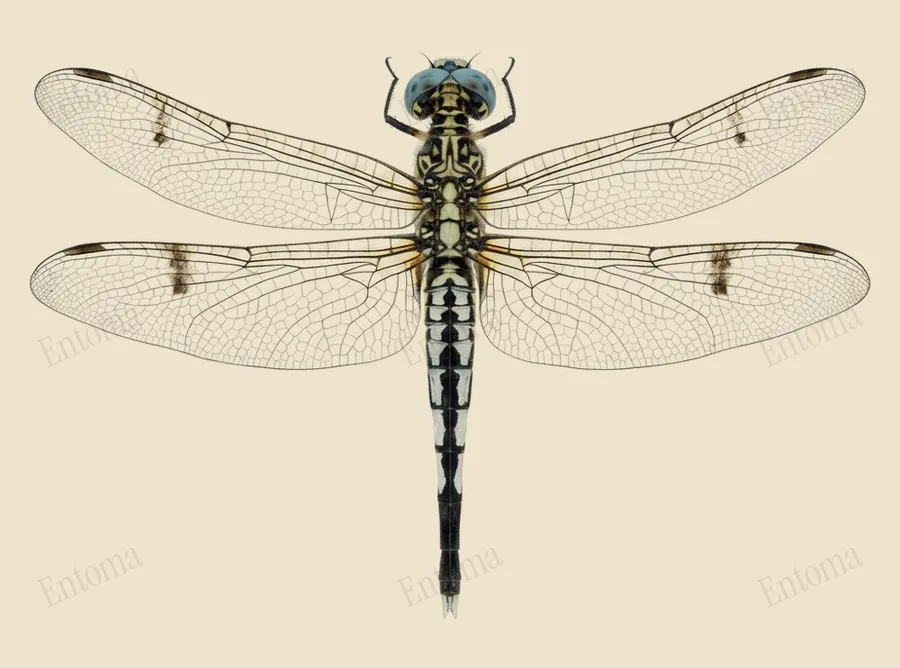
Grizzled pintail
The Grizzled pintail's abdomen swells broadly at the base then narrows abruptly into a thin cylindrical tube, a shape that gives this small dragonfly its trumpet-tail nickname.
| Where | Weedy ponds, marshes and lakes |
|---|---|
| Size | 15 to 18 mm abdomen length |
| When | January to December |
The Grizzled pintail is a small dragonfly with an abdomen that is broadly dilated over its first five segments then tapers sharply into a narrow tube from the sixth segment onward. Males are azure blue marked with black, and females are greenish yellow with similar black markings.
It flies weakly and low, rarely rising far above the ground, and is found among dense vegetation around heavily weeded ponds, lakes and marshes where it breeds.
Traits
Habitat
Wetland
Colour
Blue, Black, Yellow
Active
Day
To people
Weak, low flier that is easy to approach; safe to observe or photograph.
Activity through the year
Often confused with
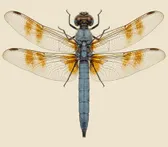
Abdomen is evenly proportioned along its length, without the abruptly swollen base and narrow trumpet-shaped tip that identifies the Grizzled pintail.
Questions
Is the Grizzled pintail dangerous to people?
Weak, low flier that is easy to approach; safe to observe or photograph.
When can you see the Grizzled pintail?
The Grizzled pintail can be seen from January to December, by day.
Plate retouched from a photo by Dan Osipov, CC BY 4.0, iNaturalist Licence
Report a mistake in this entry
Dragonflies and damselflies›Skimmers›Acisoma
Last updated 2026-09-27. Every entry is checked against published sources.