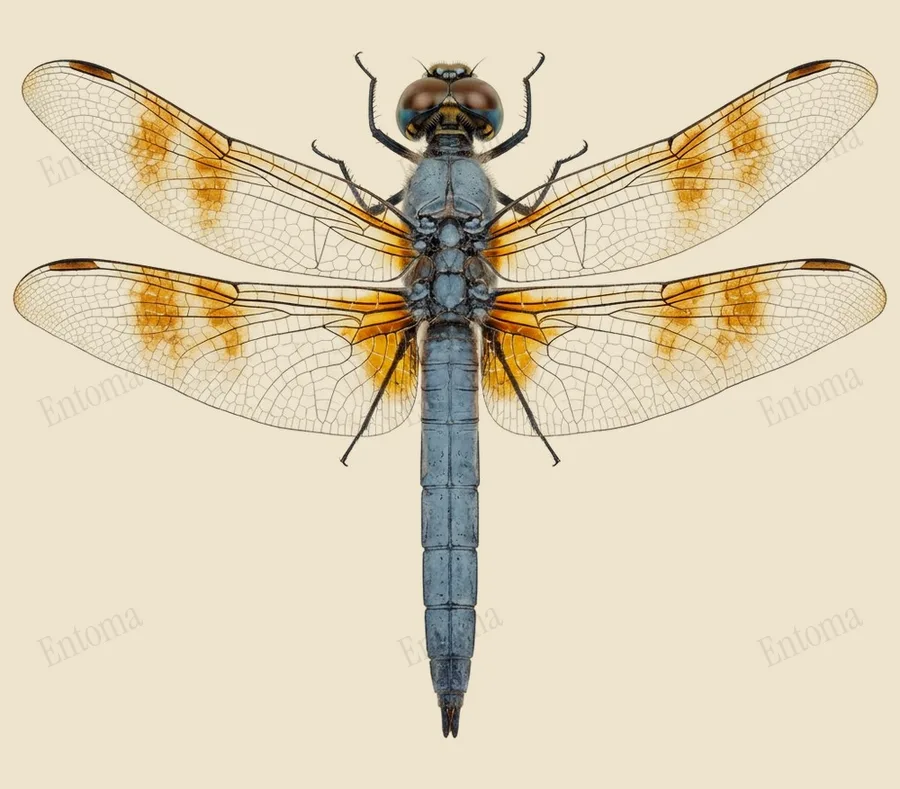
Chalky percher
Mature males turn from yellow to a chalky powder blue with age, while many females keep their green and black pattern throughout life.
| Where | Wetlands from Arabia to Australasia |
|---|---|
| Size | 18 to 22 mm abdomen length |
| When | April to December |
Young Chalky Perchers are greenish yellow with black markings on the thorax and abdomen, and males turn increasingly powdery blue with age while many females stay green. The wings are clear, without dark patches at the base or tips.
It breeds in muddy puddles, rice fields and pond edges across a wide range from the Seychelles and Arabian Peninsula to Japan, India and Australia, and often perches low on bare ground some distance from water.
Traits
Habitat
Wetland
Colour
Blue, Green, Yellow
Active
Day
To people
Not known to bite or sting people.
Activity through the year
Often confused with
Larger, with amber tinted wing bases and light brown thorax sides, unlike the smaller Chalky percher's clear wings without any basal markings.
Questions
Is the Chalky percher dangerous to people?
Not known to bite or sting people.
When can you see the Chalky percher?
The Chalky percher can be seen from April to December, by day.
Plate retouched from a museum specimen photo by Naturalis Biodiversity Center, CC0, GBIF Licence
Report a mistake in this entry
Dragonflies and damselflies›Skimmers›Diplacodes
Last updated 2026-09-27. Every entry is checked against published sources.