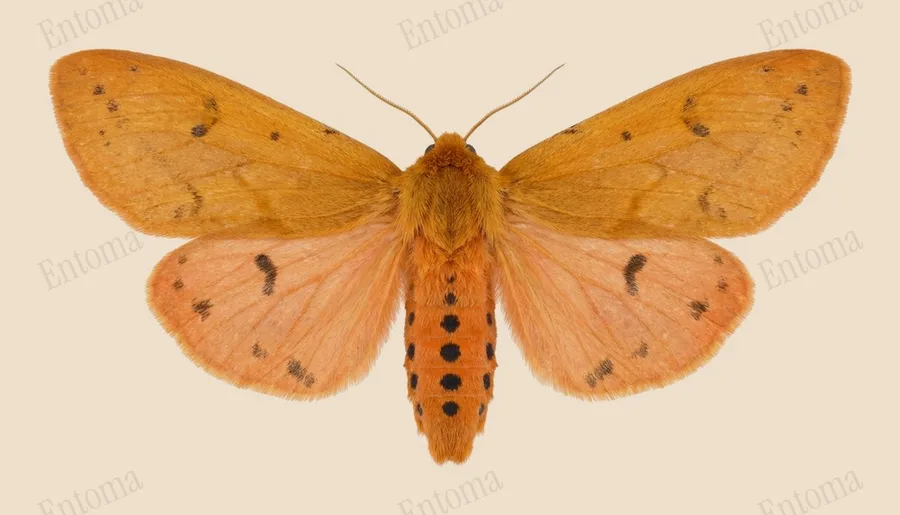
Isabella tiger moth
The banded woolly bear caterpillar can survive being frozen solid each winter, its heart, gut and blood freezing in sequence before it thaws out again in spring.
| Where | Fields, gardens and forest edges |
|---|---|
| Size | 37 to 50 mm wingspan |
| When | March to November |
Adult Isabella tiger moths are dull yellow to orange with a stout, scaly body and sparse black spots on the wings, each abdominal segment marked with three small black dots. The better known banded woolly bear caterpillar is covered in bristly black and reddish brown hair arranged in even bands of uniform length.
The caterpillar overwinters partly frozen under bark or leaf litter across the United States and Canada, resuming feeding and pupating once temperatures warm in spring. Adults are most often seen at lights after dark from spring through autumn.
Traits
Habitat
Grassland
Colour
Yellow, Orange, Brown
Active
Night
To people
Mild
Caterpillars can be handled, though their stiff hairs sometimes cause mild skin irritation in sensitive people.
Activity through the year
Often confused with
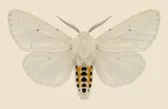
Its caterpillar is pale yellow to cream rather than banded black and reddish brown, and the adult moth is plain white rather than orange and yellow.
Questions
Is the Isabella tiger moth dangerous to people?
Mild. Caterpillars can be handled, though their stiff hairs sometimes cause mild skin irritation in sensitive people.
When can you see the Isabella tiger moth?
The Isabella tiger moth can be seen from March to November, at night.
Plate retouched from a photo by wildreturn, CC0, iNaturalist Licence
Report a mistake in this entry
Butterflies and moths›Erebid moths›Pyrrharctia
Last updated 2026-09-26. Every entry is checked against published sources.