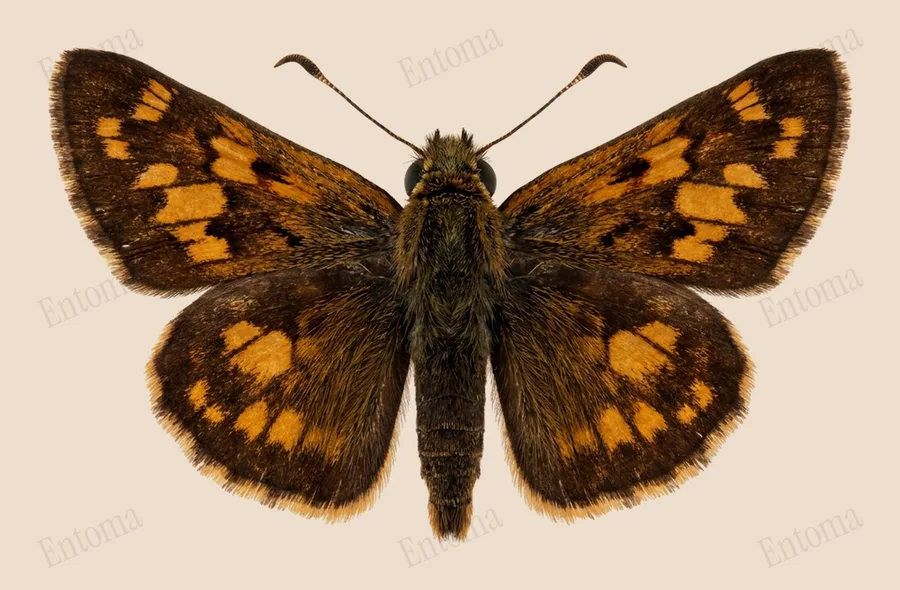
Peck's skipper
A single large straw colored patch on the underside of each hindwing is enough on its own to separate Peck's skipper from every other Polites skipper.
| Where | Meadows, lawns and open grassy places |
|---|---|
| Size | 19 to 32 mm wingspan |
| When | May to September |
Peck's skipper is a small, dark brown and yellow orange butterfly. Males carry a narrow black stigma on the forewing that females lack, and both sexes show a large pale straw colored patch across the underside of the hindwing that other Polites skippers do not share.
Caterpillars feed on lawn and meadow grasses and shelter by tying blades together with silk, while two to three generations of adults fly from spring through fall across most of Canada and the northern and central United States.
Traits
Habitat
Grassland
Colour
Brown, Orange
Active
Day
To people
Feeds at clover and garden flowers; harmless to people.
Activity through the year
Often confused with
The tawny-edged skipper has plain orange undersides on the hindwing with little or no patterning, unlike the bold, uneven straw colored band that marks the underside of Peck's skipper's hindwing.
Questions
Is the Peck's skipper dangerous to people?
Feeds at clover and garden flowers; harmless to people.
When can you see the Peck's skipper?
The Peck's skipper can be seen from May to September, by day.
Plate retouched from a museum specimen photo by Aimee Burg, Yale University Peabody Museum, CC0, GBIF Licence
Report a mistake in this entry
Butterflies and moths›Skippers›Polites
Last updated 2026-09-26. Every entry is checked against published sources.