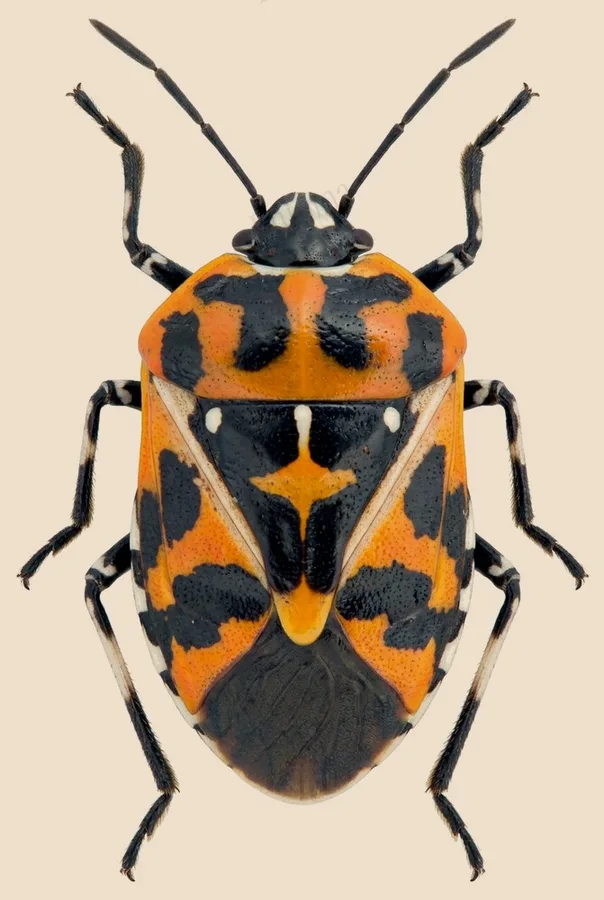
Harlequin bug
This shield-shaped bug advertises its bad taste with vivid black-and-orange markings, sequestering pungent mustard-oil compounds from cabbage-family plants that make it distasteful to birds.
| Where | Vegetable gardens and crucifer fields |
|---|---|
| Size | 6 to 10 mm body length |
| When | February to October |
The Harlequin bug is a shield-shaped stink bug about 6 to 10 mm long, boldly patterned in black with red, orange or yellow markings, including a mark across the back resembling an X where the folded wings meet. Nymphs share the same bright warning colors as adults.
Adults and nymphs pierce the leaves and stems of cabbage, broccoli, kale and other crucifer plants to feed on the sap, and females lay barrel-shaped black-and-white eggs in neat rows on the underside of leaves. The bug stores pungent mustard-oil compounds from its host plants in its own body, making it distasteful to many predatory birds.
Traits
Habitat
Farmland
Colour
Black, Red, Orange
Active
Day
To people
Mild
Safe to touch, but its sequestered mustard-oil compounds make it taste bad to birds and other predators.
Activity through the year
Often confused with
Also patterned in black, red and orange, but carries only two large red spots on an otherwise black back rather than the many small red, orange and yellow blocks covering the Harlequin bug, and it hunts other insects instead of feeding on crucifer plants.
A much smaller stink bug with only two red marks near the front of its back, lacking the checkerboard pattern of red, orange and black blocks that covers the whole back of the Harlequin bug.
Questions
Is the Harlequin bug dangerous to people?
Mild. Safe to touch, but its sequestered mustard-oil compounds make it taste bad to birds and other predators.
When can you see the Harlequin bug?
The Harlequin bug can be seen from February to October, by day.
Plate retouched from a photo by Andrew Meeds, CC BY 4.0, iNaturalist Licence
Report a mistake in this entry
True bugs›Shield bugs›Murgantia
Last updated 2026-09-27. Every entry is checked against published sources.