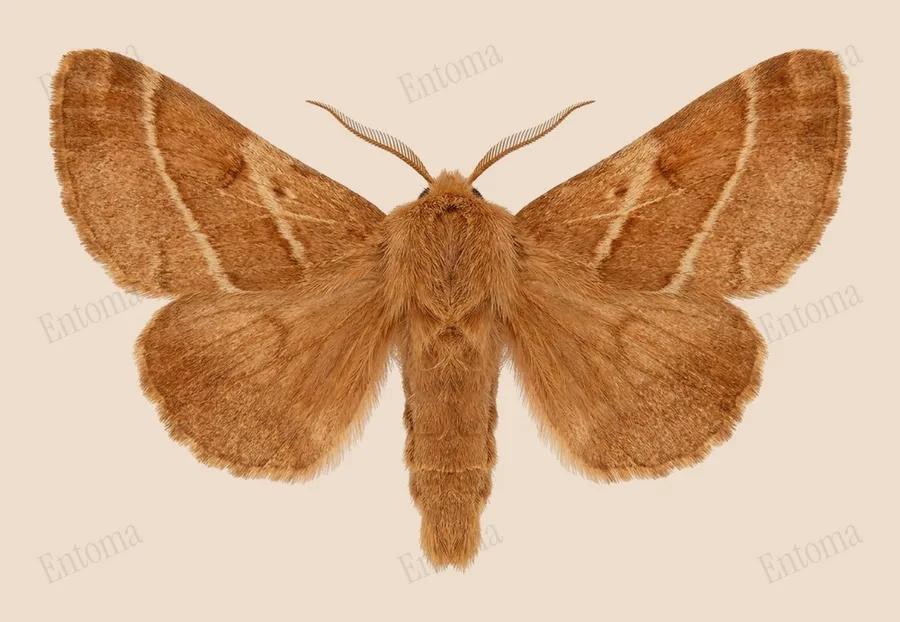
Eastern tent caterpillar moth
Caterpillars build silk tents in the forks of cherry and apple trees each spring, and can strip a small tree bare of leaves within a few weeks.
| Where | Woodlands, orchards and roadsides |
|---|---|
| Size | 50 to 65 mm wingspan |
| When | March to July |
Adult moths are reddish brown with two pale diagonal stripes crossing each forewing, and appear noticeably smaller and plainer than the caterpillar stage most people recognize.
Caterpillars are black with a white stripe down the back and blue spots along the sides, and live together in silk tents built in tree forks, feeding on wild cherry, apple and related trees each spring.
Traits
Habitat
Farmland
Colour
Brown, White
Active
Night
To people
Harmless to people; large caterpillar outbreaks can strip host trees of leaves but rarely kill them.
Activity through the year
Often confused with
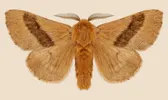
Caterpillar shows a row of pale keyhole shaped spots down the back instead of the continuous white stripe of the Eastern tent caterpillar moth, and spins only a silk resting mat rather than an enclosed tent.
Questions
Is the Eastern tent caterpillar moth dangerous to people?
Harmless to people; large caterpillar outbreaks can strip host trees of leaves but rarely kill them.
When can you see the Eastern tent caterpillar moth?
The Eastern tent caterpillar moth can be seen from March to July, at night.
Plate retouched from a museum specimen photo by AJ Thomas, Colorado State University, C.P. Gillette Museum of Arthropod Diversity, CC0, GBIF Licence
Report a mistake in this entry
Butterflies and moths›Lappet moths›Malacosoma
Last updated 2026-09-26. Every entry is checked against published sources.