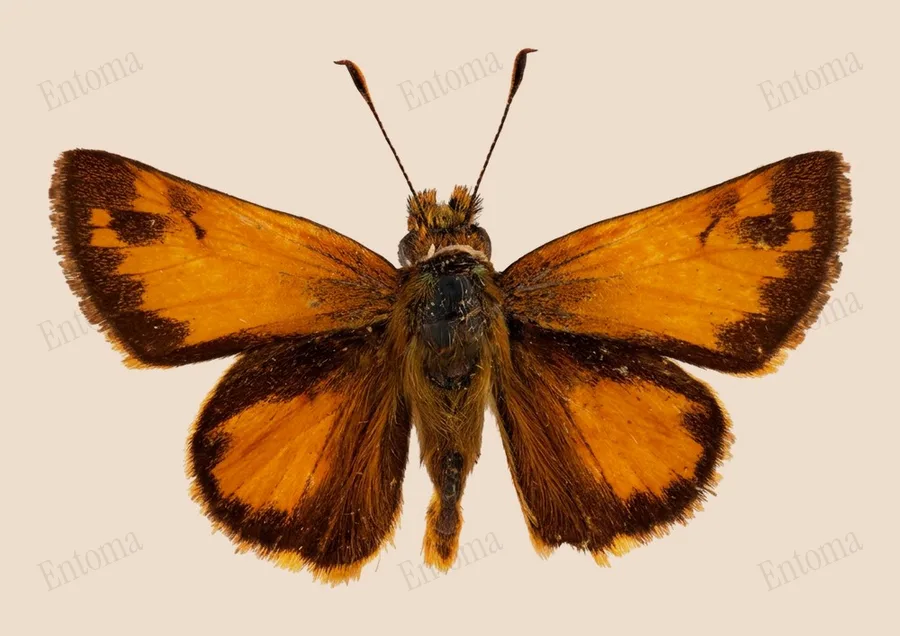
Zabulon skipper
This skipper flies in two broods each year, and only the checkered rust brown spots on its yellow underwing reliably separate it from the very similar Hobomok skipper.
| Where | Open woodlands and woodland edges |
|---|---|
| Size | 33 to 41 mm wingspan |
| When | April to September |
The Zabulon skipper shows strong differences between the sexes. Males are yellow orange above with dark brown borders, while females are dark brown with a row of small square white spots across the forewing.
Caterpillars feed on grasses, and adults fly in two broods, in late spring and again in late summer, through open woodlands, woodland edges and streambanks. The similar Hobomok skipper overlaps in range but flies in a single spring brood.
Traits
Habitat
Woodland
Colour
Orange, Brown
Active
Day
To people
Not known to bite or sting; adults commonly visit flowers along woodland trails.
Activity through the year
Often confused with
Has a single large blocky golden patch with only one small gold dot on the underside hindwing, and flies in a single spring brood, unlike the two-brooded Zabulon skipper with its scattered rust brown spots.
Questions
Is the Zabulon skipper dangerous to people?
Not known to bite or sting; adults commonly visit flowers along woodland trails.
When can you see the Zabulon skipper?
The Zabulon skipper can be seen from April to September, by day.
Plate retouched from a museum specimen photo by Jeffrey Sneed, Arizona State University Biocollections, CC0, GBIF Licence
Report a mistake in this entry
Butterflies and moths›Skippers›Lon
Last updated 2026-09-26. Every entry is checked against published sources.