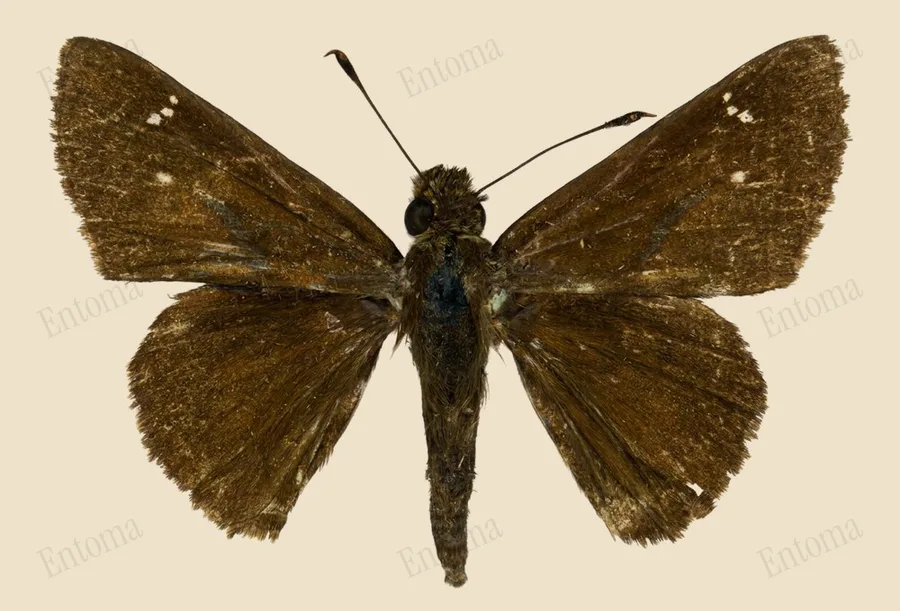
Clouded skipper
Its caterpillars feed on common lawn grasses such as St. Augustinegrass, yet the adult skipper favors tropical-looking blooms like lantana and buttonbush for nectar.
| Where | Wet woodlands across the southern United States |
|---|---|
| Size | 32 to 45 mm wingspan |
| When | April to November |
The clouded skipper is dark brown with small, hazy white spots on the forewing, more numerous and better defined in females, and a violet blue sheen washing over the underside of the hindwing.
Caterpillars feed on grasses, including St. Augustinegrass, building shelters by tying blades together with silk, while adults visit a range of pink, purple, and white flowers for nectar.
Traits
Habitat
Wetland
Colour
Brown, White, Blue
Active
Day
To people
Feeds only on nectar as an adult and poses no risk to people.
Activity through the year
Often confused with
Nearly unmarked plain brown below with at most a faint spot band, lacking the clouded skipper's small white forewing spots and violet blue hindwing sheen.
Questions
Is the Clouded skipper dangerous to people?
Feeds only on nectar as an adult and poses no risk to people.
When can you see the Clouded skipper?
The Clouded skipper can be seen from April to November, by day.
Plate retouched from a museum specimen photo by Swiss Natural History Collections - SwissNatColl, CC BY 4.0, GBIF Licence
Report a mistake in this entry
Butterflies and moths›Skippers›Lerema
Last updated 2026-09-26. Every entry is checked against published sources.