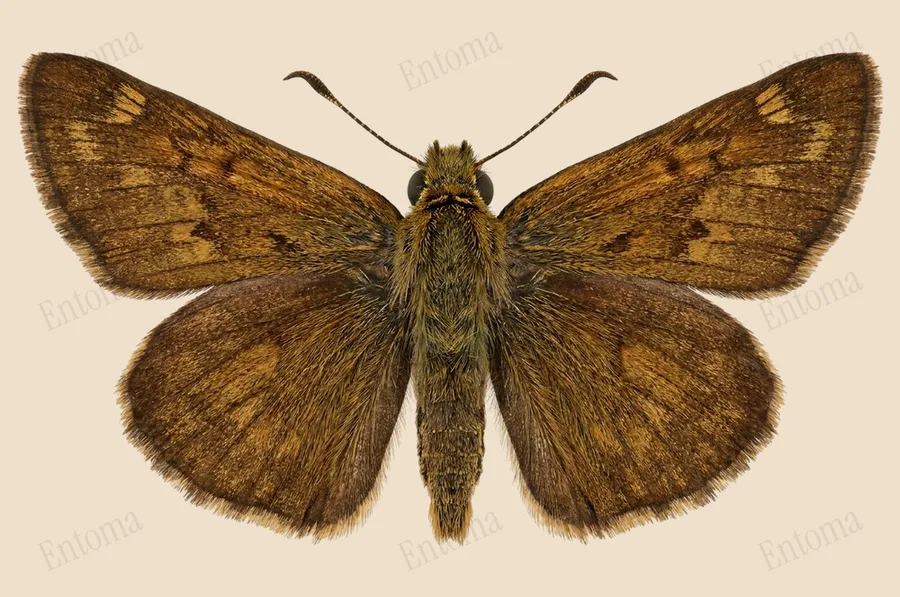
Dun skipper
Male Dun skippers perch close to the ground waiting for females, and their caterpillars feed only on sedges rather than grasses.
| Where | Wet meadows, marshes and woodland edges |
|---|---|
| Size | 25 to 35 mm wingspan |
| When | April to September |
The Dun skipper is a small, plain butterfly, dark brown above and below, sometimes with a golden-olive sheen on a fresh head and thorax. Males show a black scent patch on the forewing and little other patterning, while females carry two small pale spots and a faint spot band beneath the hindwing.
Caterpillars feed on a variety of sedges, and adults fly in wet meadows, marshes, stream edges and woodland edges, visiting flowers such as milkweed, dogbane and selfheal. In most of its range there is one generation a year, though southern populations can produce two or more broods.
Traits
Habitat
Wetland
Colour
Brown, Orange
Active
Day
To people
Safe to handle; it does not sting or bite people.
Activity through the year
Often confused with
Shows a white spot at the base of the antennal club and a pair of pale, glassy spots in the center of the forewing, both absent on the plainer Dun skipper.
Questions
Is the Dun skipper dangerous to people?
Safe to handle; it does not sting or bite people.
When can you see the Dun skipper?
The Dun skipper can be seen from April to September, by day.
Plate retouched from a photo by John Hibbard, CC BY 4.0, iNaturalist Licence
Report a mistake in this entry
Butterflies and moths›Skippers›Euphyes
Last updated 2026-09-27. Every entry is checked against published sources.