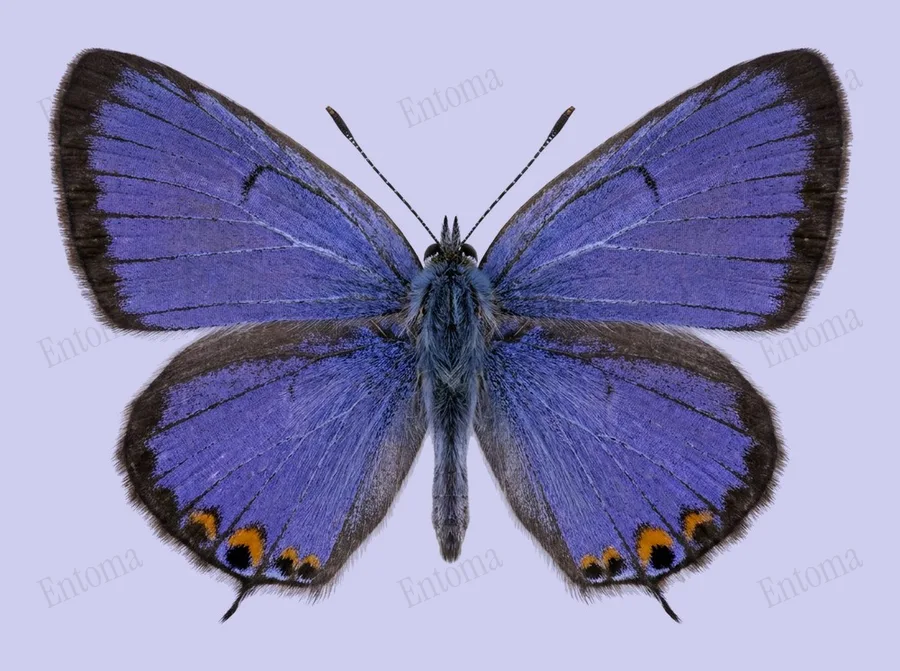
Eastern tailed-blue
This small butterfly can produce three broods in a single season and keeps flying into late fall, long after most other blues have finished for the year.
| Where | Fields, roadsides and gardens |
|---|---|
| Size | 21 to 29 mm wingspan |
| When | April to October |
The Eastern tailed-blue is a small butterfly, pale violet-blue above in males and grey-brown in females, with a thin, threadlike tail on each hindwing and one or two small orange spots near the tail on the underside.
Several broods fly in succession from spring through fall, and caterpillars feed on the flowers and seedpods of clovers and other legumes in open, sunny places such as fields, roadsides and gardens.
Traits
Habitat
Grassland
Colour
Blue, Brown, Orange
Active
Day
To people
Common and easy to see at close range; does not sting or bite.
Activity through the year
Often confused with
Similar in size and pattern, but the Western tailed-blue shows only one faint orange spot near the tail instead of the Eastern species' two more distinct orange spots.
Questions
Is the Eastern tailed-blue dangerous to people?
Common and easy to see at close range; does not sting or bite.
When can you see the Eastern tailed-blue?
The Eastern tailed-blue can be seen from April to October, by day.
Plate retouched from a museum specimen photo by Swiss Natural History Collections - SwissNatColl, CC BY 4.0, GBIF Licence
Report a mistake in this entry
Butterflies and moths›Blues and coppers›Everes
Last updated 2026-09-26. Every entry is checked against published sources.