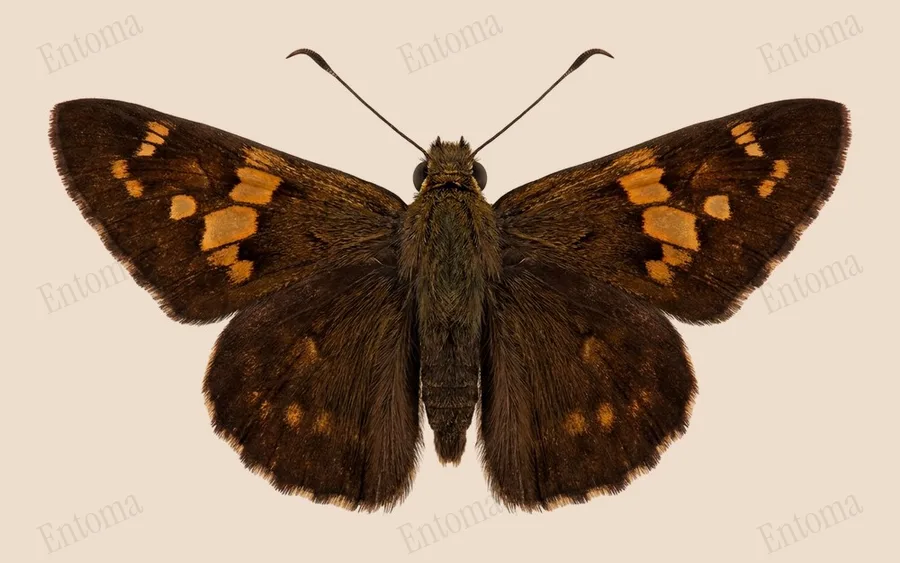
Silver-spotted skipper
Silver-spotted skipper caterpillars fold a leaf into a shelter with silk, and two swollen orange false eyespots on the head are thought to startle would-be predators.
| Where | Gardens, woodland edges and meadows |
|---|---|
| Size | 43 to 67 mm wingspan |
| When | April to September |
The silver-spotted skipper is a large, dark brown skipper with a translucent gold patch across each forewing and a bold silvery white patch on the underside of the hindwing, which gives the species its name. Its flight is fast and darting, with sharply pointed forewings held swept back at rest.
Caterpillars feed on locust, wisteria and other legumes across most of the United States and southern Canada, folding a leaf into a shelter that they retreat into between meals. Adults visit a wide range of flowers, generally favoring red, purple and blue blooms over yellow ones.
Traits
Habitat
Garden
Colour
Brown, Orange
Active
Day
To people
Visits garden flowers for nectar; harmless to handle.
Activity through the year
Often confused with
Shows a pale, frosted white patch confined to the outer third of the hindwing underside, rather than the bold, centrally placed silver-white patch of the silver-spotted skipper.
Questions
Is the Silver-spotted skipper dangerous to people?
Visits garden flowers for nectar; harmless to handle.
When can you see the Silver-spotted skipper?
The Silver-spotted skipper can be seen from April to September, by day.
Plate retouched from a museum specimen photo by Virginia Tech, Department of Entomology, Virginia Tech Insect Collection, CC0, GBIF Licence
Report a mistake in this entry
Butterflies and moths›Skippers›Epargyreus
Last updated 2026-09-26. Every entry is checked against published sources.