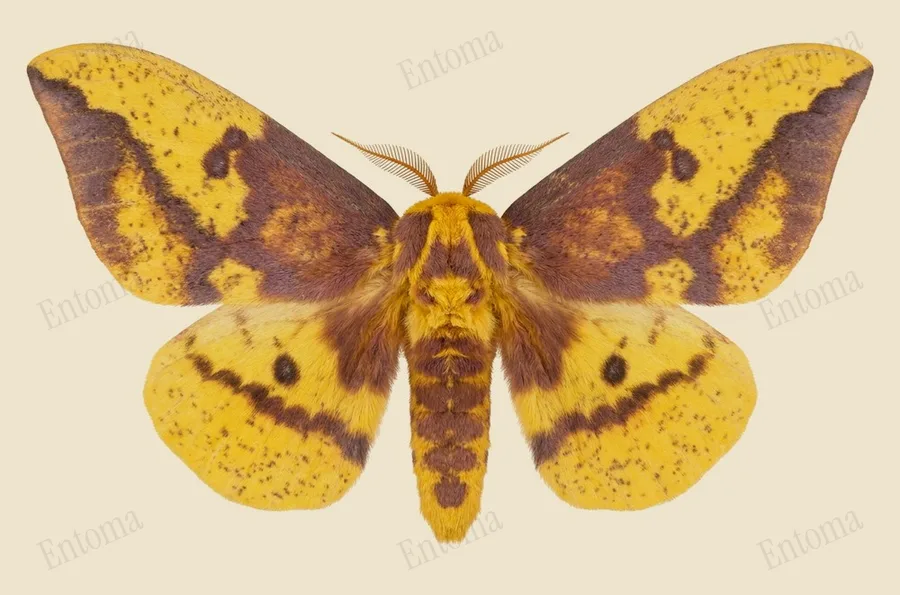
Imperial moth
Adult imperial moths have no functional mouthparts and never feed after emerging, living only on stored fat reserves long enough to mate and lay eggs before dying.
| Where | Deciduous forests across the range |
|---|---|
| Size | 80 to 175 mm wingspan |
| When | June to October |
This large silkworm moth has yellow wings speckled with pink, orange or rusty purple patches; males usually carry heavier reddish-brown markings than the paler, more solidly yellow females. Wingspan ranges from about 80 to 175 mm, among the largest moths in North America.
Caterpillars are large, spiny and variable in color from green to brown, feeding on the leaves of maple, oak, sycamore, sweetgum and pine. Adults have no working mouthparts and never feed, living only long enough on stored reserves to mate and lay eggs.
Traits
Habitat
Woodland
Colour
Yellow, Orange, Brown
Active
Night
To people
Adults are drawn strongly to porch lights and never feed; the spiny caterpillars are not known to sting and are harmless to handle.
Activity through the year
Often confused with
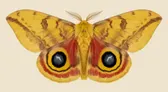
The Io moth has bold circular eyespots on its hindwings that snap into view when disturbed, and its caterpillar carries stinging spines, both features the imperial moth's caterpillar lacks.
Questions
Is the Imperial moth dangerous to people?
Adults are drawn strongly to porch lights and never feed; the spiny caterpillars are not known to sting and are harmless to handle.
When can you see the Imperial moth?
The Imperial moth can be seen from June to October, at night.
Plate retouched from a photo by Alex Novarro, CC BY 4.0, iNaturalist Licence
Report a mistake in this entry
Butterflies and moths›Emperor moths›Eacles
Last updated 2026-09-26. Every entry is checked against published sources.