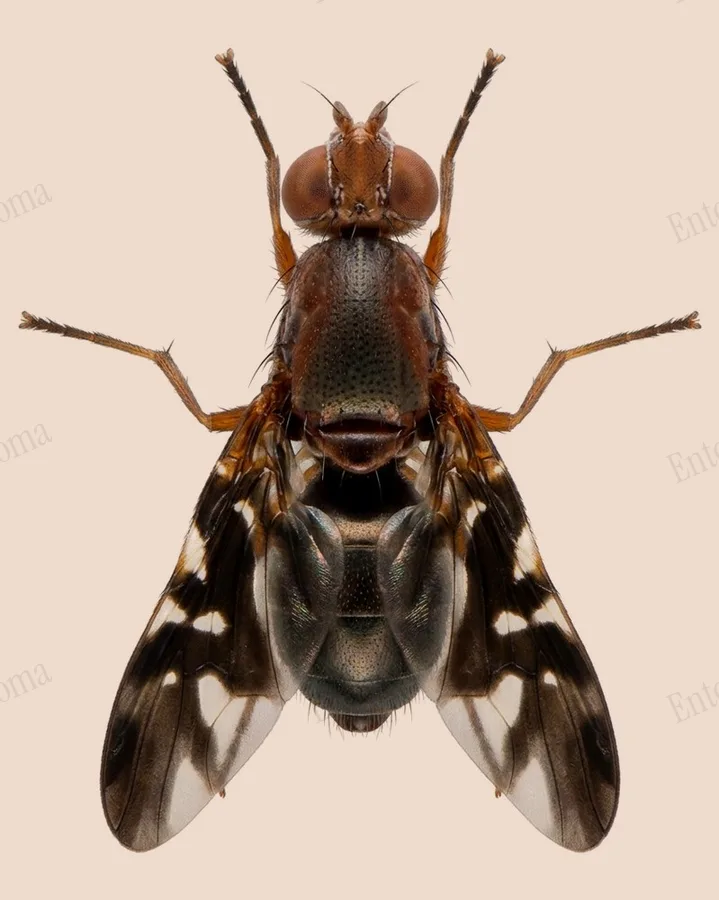
Common picture-winged fly
Its dark wings are marked with bold white bars, a pattern that separates it from true fruit flies even though both breed in rotting produce.
| Where | Gardens and decaying plant debris |
|---|---|
| Size | 5 to 9 mm long (body length) |
| When | April to October |
The Common picture-winged fly is a small fly, 5 to 9 mm long, with a light brown to flesh-colored body and boldly patterned wings marked with solid black and white bars and spots. Its eyes often show a pink or rose tint, and it differs from true fruit flies in wing vein pattern and family.
Adults rest on foliage or on the ground near rotting fruit, vegetables and other decaying plant matter, where females lay their eggs. The maggot-like larvae feed on this decaying material as it breaks down, usually completing development within the same season.
Traits
Habitat
Garden
Colour
Black, White, Brown
Active
Day
To people
Harmless to people; it does not bite or sting.
Activity through the year
Often confused with
A smaller picture-winged fly whose wings are covered in small dark spots rather than bold white bars, and which struts with its wings raised upright like a fan instead of resting with them flat.
Questions
Is the Common picture-winged fly dangerous to people?
Harmless to people; it does not bite or sting.
When can you see the Common picture-winged fly?
The Common picture-winged fly can be seen from April to October, by day.
Plate retouched from a photo by moxostoma, CC BY 4.0, iNaturalist Licence
Report a mistake in this entry
Flies›Picture-winged flies›Delphinia
Last updated 2026-09-27. Every entry is checked against published sources.