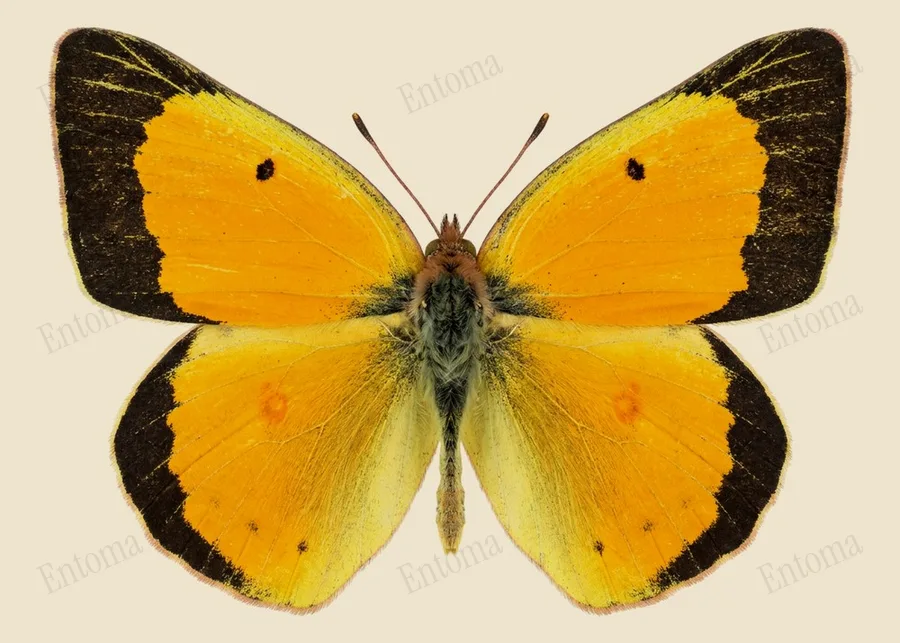
Orange sulphur
Several overlapping generations fly from spring until the first hard frost, making it one of the most frequently seen butterflies in fields and roadsides.
| Where | Open fields, meadows and roadsides |
|---|---|
| Size | 35 to 70 mm wingspan |
| When | March to November |
The Orange sulphur has orange-yellow to deep orange upperwings edged with black, solid in males and broken into pale spots in females. Some females are much paler and easily mistaken for the similar Clouded sulphur.
Several generations fly each year from spring until the first hard frost, and caterpillars feed on clover, alfalfa and other legumes in open fields, meadows and roadsides across most of North America.
Traits
Habitat
Farmland
Colour
Orange, Yellow, Black
Active
Day
To people
Harmless to people; adults visit garden and roadside flowers for nectar and do not bite or sting.
Activity through the year
Often confused with
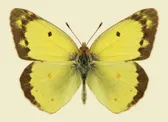
Its upperwings are plain lemon yellow rather than showing the orange tones of the Orange sulphur, though pale females of both species can look nearly identical.
Questions
Is the Orange sulphur dangerous to people?
Harmless to people; adults visit garden and roadside flowers for nectar and do not bite or sting.
When can you see the Orange sulphur?
The Orange sulphur can be seen from March to November, by day.
Plate retouched from a museum specimen photo by Virginia Tech, Department of Entomology, Virginia Tech Insect Collection, CC0, GBIF Licence
Report a mistake in this entry
Butterflies and moths›Whites and yellows›Colias
Last updated 2026-09-26. Every entry is checked against published sources.