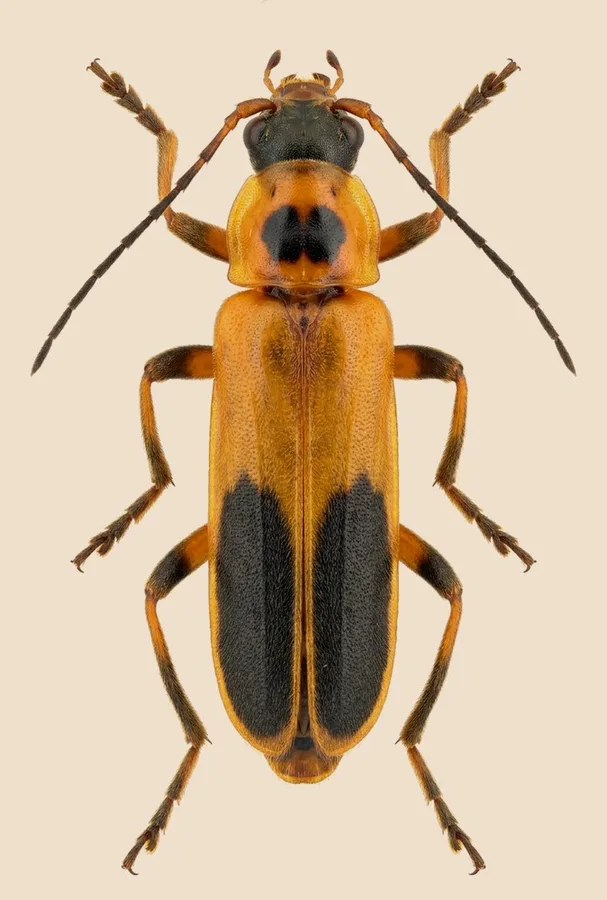
Goldenrod soldier beetle
Adults gather on goldenrod to feed and mate each fall, while a near-identical relative with a solid black pronotum band instead of a spot flies earlier, in spring.
| Where | Fields, meadows and goldenrod patches |
|---|---|
| Size | 9 to 16 mm body length |
| When | July to October |
The Goldenrod soldier beetle has soft, leathery, burnt orange wing covers tipped with black and a single black spot in the center of the pronotum, unlike the similar Margined leatherwing, which shows a solid black band across the pronotum instead of a spot.
Adults gather on goldenrod flowers to feed and mate in late summer and early fall, while both adults and their larvae prey on aphids, caterpillars and other soft-bodied insects in gardens and fields.
Traits
Habitat
Grassland
Colour
Orange, Yellow, Black
Active
Day
To people
Not considered a threat to humans; adults do not bite or sting, and both larvae and adults help control garden pests like aphids and caterpillars.
Activity through the year
Often confused with
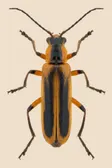
It has a solid black band across the pronotum instead of a single dark spot, and it flies earlier in the year, in spring, rather than in late summer and fall.
Questions
Is the Goldenrod soldier beetle dangerous to people?
Not considered a threat to humans; adults do not bite or sting, and both larvae and adults help control garden pests like aphids and caterpillars.
When can you see the Goldenrod soldier beetle?
The Goldenrod soldier beetle can be seen from July to October, by day.
Plate retouched from a photo by aster-asti, CC0, iNaturalist Licence
Report a mistake in this entry
Beetles›Soldier beetles›Chauliognathus
Last updated 2026-09-26. Every entry is checked against published sources.