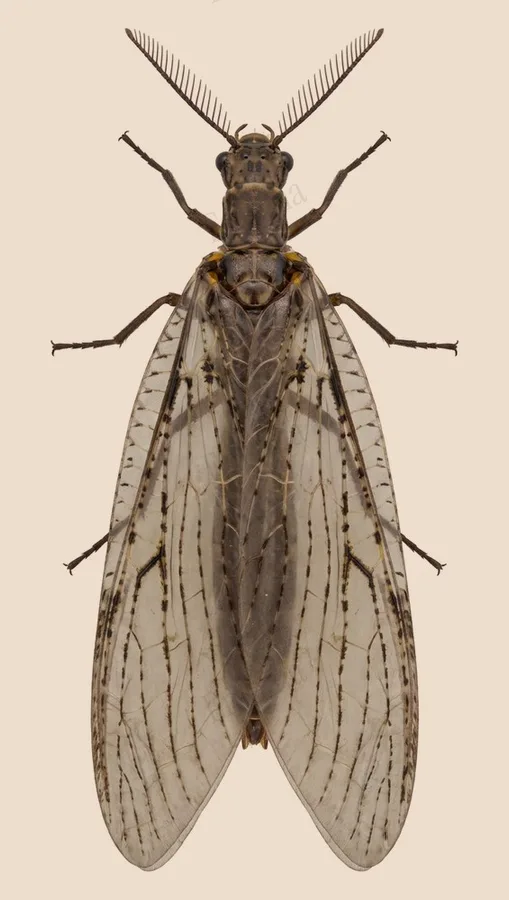
Spring fishfly
Adult spring fishflies likely do not feed at all, living only a few days on energy stored during one to five years as an aquatic larva.
| Where | Ponds, marshes and wooded streams |
|---|---|
| Size | 35 to 50 mm body length |
| When | March to August |
The Spring fishfly is a large, soft-bodied insect 35 to 50 mm long with grayish brown, mottled wings held tent-like over the body and a long face with chewing mouthparts. Males carry feathery, comb-like antennae while females have simpler saw-toothed antennae, and both sexes have two large compound eyes plus three small simple eyes.
Larvae are aquatic, living in ponds, swamps, marshes and slow streams for one to five years while feeding on algae, worms, clams and other invertebrates, then pupate in damp soil near the water's edge. Adults appear in spring, resting hidden by day and flying at dusk for only a few days before dying.
Traits
Habitat
Wetland
Colour
Brown, Grey, Yellow
Active
Night
To people
Harmless; adults have weak mouthparts, do not bite, and probably do not feed at all.
Activity through the year
Often confused with
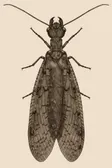
Very similar in shape, but the Spring fishfly is paler and less yellow overall and flies earlier in the year, before this look-alike's summer flight period begins.
Shares the same wooded-stream habitat, but males carry greatly enlarged, pincer-like mandibles far longer than the short jaws of the Spring fishfly.
Questions
Is the Spring fishfly dangerous to people?
Harmless; adults have weak mouthparts, do not bite, and probably do not feed at all.
When can you see the Spring fishfly?
The Spring fishfly can be seen from March to August, at night.
Plate retouched from a photo by meaningful_name, CC0, iNaturalist Licence
Report a mistake in this entry
Dobsonflies and alderflies›Dobsonflies and fishflies›Chauliodes
Last updated 2026-09-27. Every entry is checked against published sources.