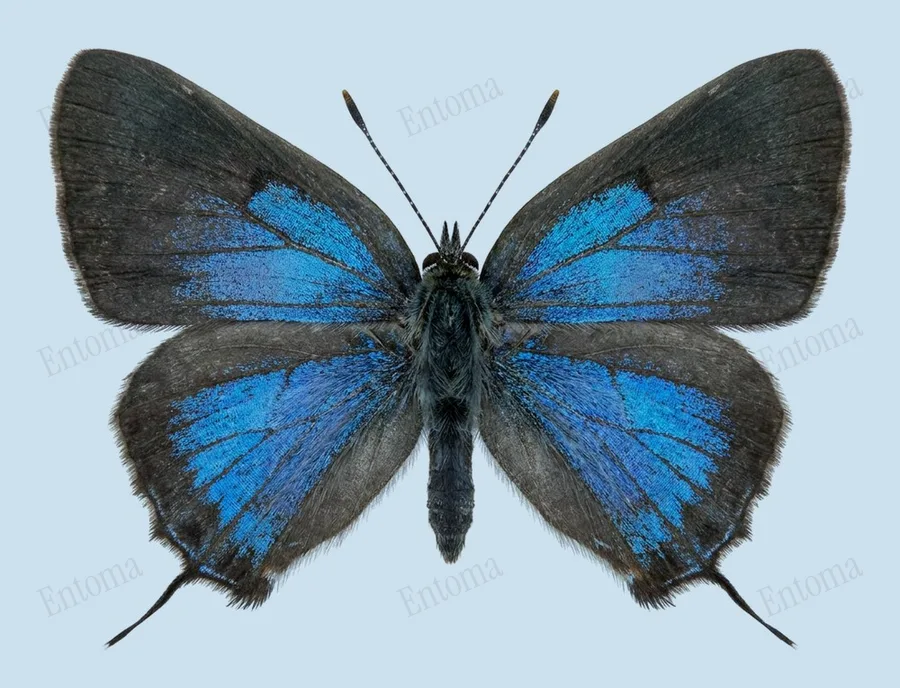
Red-banded hairstreak
This small butterfly's caterpillars eat fallen, partly decayed leaves instead of fresh growth, an unusual diet for a butterfly larva.
| Where | Woodland edges, gardens and clearings |
|---|---|
| Size | 19 to 32 mm wingspan |
| When | March to October |
The Red-banded hairstreak is a small butterfly with gray-brown underwings crossed by a bright red-orange band edged in white. Short tails and a small black eyespot near the hindwing's outer edge form a false head that helps misdirect predators toward the wrong end of the butterfly.
Adults fly from spring through autumn across woodland edges, gardens and open clearings, nectaring with the head held low and the false head raised. Caterpillars are unusual among butterflies for feeding on fallen, partly decayed leaves of sumacs and wax myrtle rather than fresh foliage.
Traits
Habitat
Garden
Colour
Brown, Red, Blue
Active
Day
To people
Visits garden flowers such as goldenrod; harmless to people.
Activity through the year
Often confused with
Nearly identical and overlapping in range across Texas, separated only by subtle differences in the underside wing pattern that even experienced observers can find difficult to judge.
Questions
Is the Red-banded hairstreak dangerous to people?
Visits garden flowers such as goldenrod; harmless to people.
When can you see the Red-banded hairstreak?
The Red-banded hairstreak can be seen from March to October, by day.
Plate retouched from a museum specimen photo by Swiss Natural History Collections - SwissNatColl, CC BY 4.0, GBIF Licence
Report a mistake in this entry
Butterflies and moths›Blues and coppers›Calycopis
Last updated 2026-09-26. Every entry is checked against published sources.