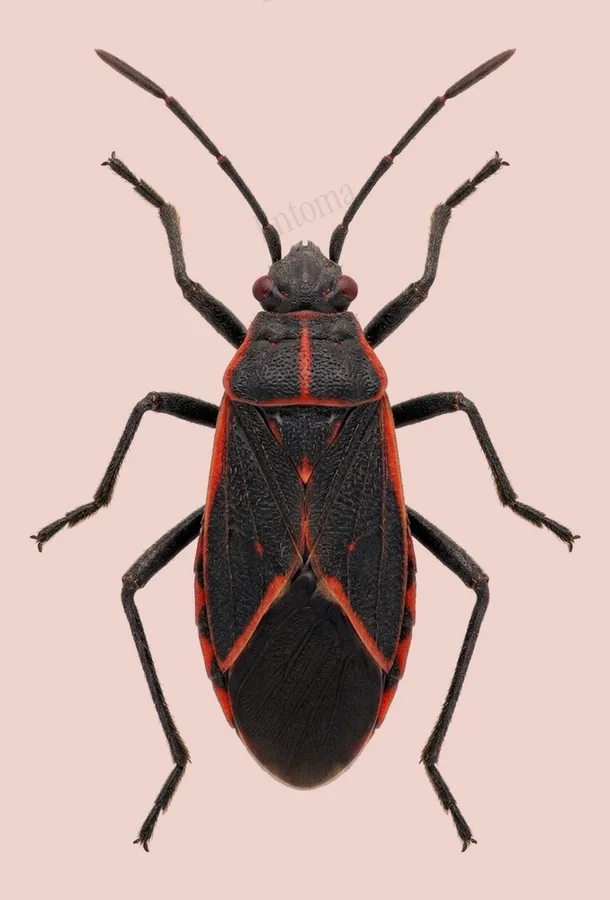
Eastern boxelder bug
Adults gather by the hundreds on sun-warmed walls each autumn while searching for a place to spend the winter, then disperse back to boxelder trees in spring.
| Where | Boxelder trees, walls and gardens |
|---|---|
| Size | 11 to 14 mm body length |
| When | February to November |
The Eastern boxelder bug is black with three red-orange stripes on the thorax and red lines along the edges of the wings; young nymphs are bright red and darken as they mature.
Adults and nymphs feed mainly on boxelder trees, especially the seeds of female trees, and gather in large numbers on sun-warmed walls and rocks each fall before sheltering in cracks and buildings for winter.
Traits
Habitat
Towns
Colour
Black, Red
Active
Day
To people
Considered a harmless nuisance; boxelder bugs do not bite or sting people, though large indoor gatherings can stain fabric and walls.
Activity through the year
Often confused with
It has extra red-orange lines running along the internal veins of the forewings, not just along the edges as in the Eastern boxelder bug.
Questions
Is the Eastern boxelder bug dangerous to people?
Considered a harmless nuisance; boxelder bugs do not bite or sting people, though large indoor gatherings can stain fabric and walls.
When can you see the Eastern boxelder bug?
The Eastern boxelder bug can be seen from February to November, by day.
Plate retouched from a photo by Katja Schulz, CC BY 4.0, iNaturalist Licence
Report a mistake in this entry
True bugs›Scentless plant bugs›Boisea
Last updated 2026-09-26. Every entry is checked against published sources.