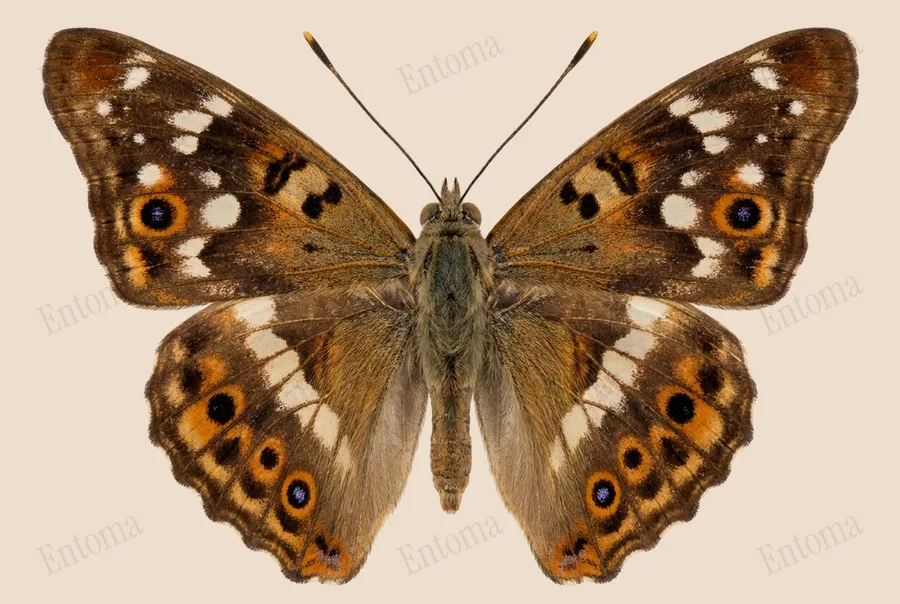
Hackberry emperor
Adults rarely visit flowers and instead land on people to drink salt from sweat, a habit shared with its close relative the Tawny emperor.
| Where | Woodlands, parks and hackberry trees |
|---|---|
| Size | 32 to 64 mm wingspan |
| When | April to October |
The Hackberry emperor is tan with dark wingtips marked by white spots and a distinct black eyespot, and its forewing cell shows one unbroken dark bar with a second bar broken into two offset spots. The similar Tawny emperor is more rust colored, with two unbroken bars and no dark, white-spotted forewing tips.
Caterpillars feed only on hackberry trees, and adults perch head-down on tree trunks or fence posts, darting out at passing animals and people, feeding on sap, rotting fruit, dung and sweat rather than flower nectar.
Traits
Habitat
Woodland
Colour
Brown, White, Black
Active
Day
To people
Harmless to people, though adults often land on skin to drink sweat; they do not bite or sting.
Activity through the year
Often confused with
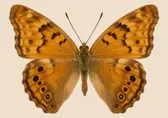
It is more rust colored than the neutral tan Hackberry emperor, with two unbroken dark bars in the forewing cell instead of one bar plus two offset spots, and lacks the Hackberry emperor's white-spotted, dark forewing tips.
Questions
Is the Hackberry emperor dangerous to people?
Harmless to people, though adults often land on skin to drink sweat; they do not bite or sting.
When can you see the Hackberry emperor?
The Hackberry emperor can be seen from April to October, by day.
Plate retouched from a photo by florawhite, CC BY 4.0, iNaturalist Licence
Report a mistake in this entry
Butterflies and moths›Brush-footed butterflies›Asterocampa
Last updated 2026-09-26. Every entry is checked against published sources.