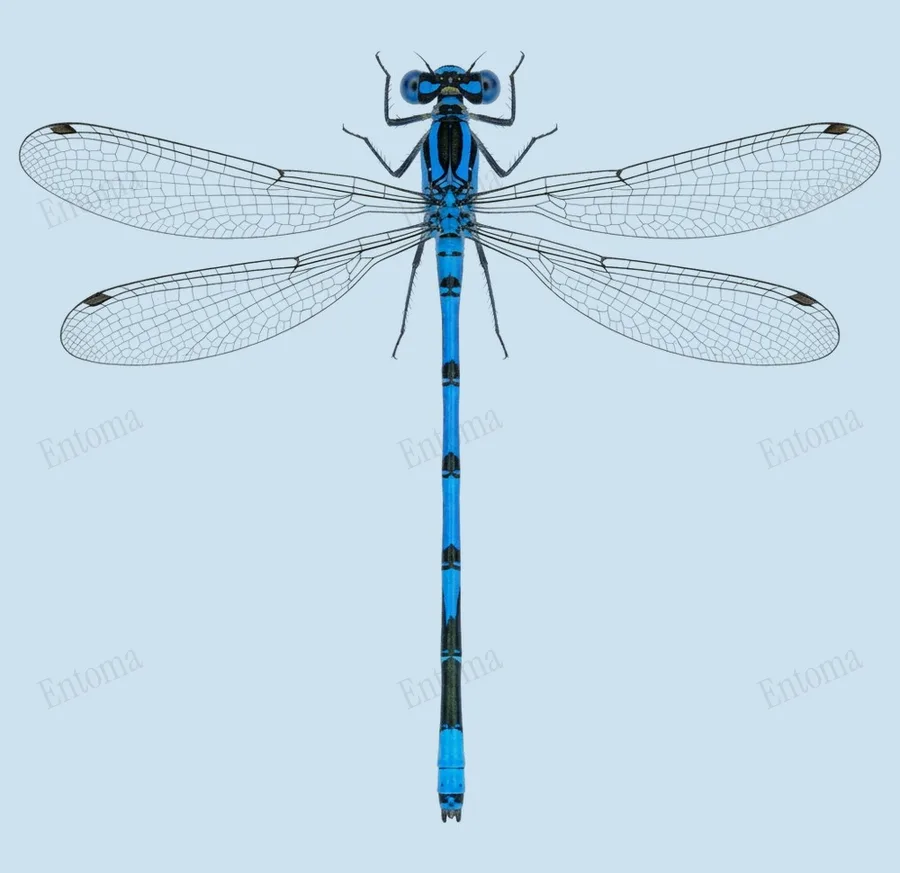
Vivid dancer
Depending on the temperature, this damselfly shifts between a bright blue phase in warm conditions and a duller, red-brown or brown phase when it cools down.
| Where | Spring-fed streams, seeps and warm pools |
|---|---|
| Size | 29 to 38 mm (body length) |
| When | March to September |
The Vivid dancer is a robust damselfly, 29 to 38 mm long. Males are bright violet-blue with black rings on the abdomen and a broad stripe on the thorax, while females appear blue, red-brown or brown.
This species lives around warm mineral springs as well as ordinary spring-fed streams and seeps, and its colour is not fixed: individuals turn a paler, brighter shade in warm conditions and a darker, duller shade when temperatures drop. Larvae develop underwater, sometimes in geothermally heated pools.
Traits
Habitat
Wetland
Colour
Blue, Brown, Red
Active
Day
To people
Harmless to people; it does not bite or sting.
Activity through the year
Often confused with
Extremely similar and easily confused with the Vivid dancer in the field; the two are best told apart by close examination of the male's abdominal appendages rather than by colour.
Questions
Is the Vivid dancer dangerous to people?
Harmless to people; it does not bite or sting.
When can you see the Vivid dancer?
The Vivid dancer can be seen from March to September, by day.
Plate retouched from a photo by desertnaturalist, CC BY 4.0, iNaturalist Licence
Report a mistake in this entry
Dragonflies and damselflies›Narrow-winged damselflies›Argia
Last updated 2026-09-27. Every entry is checked against published sources.