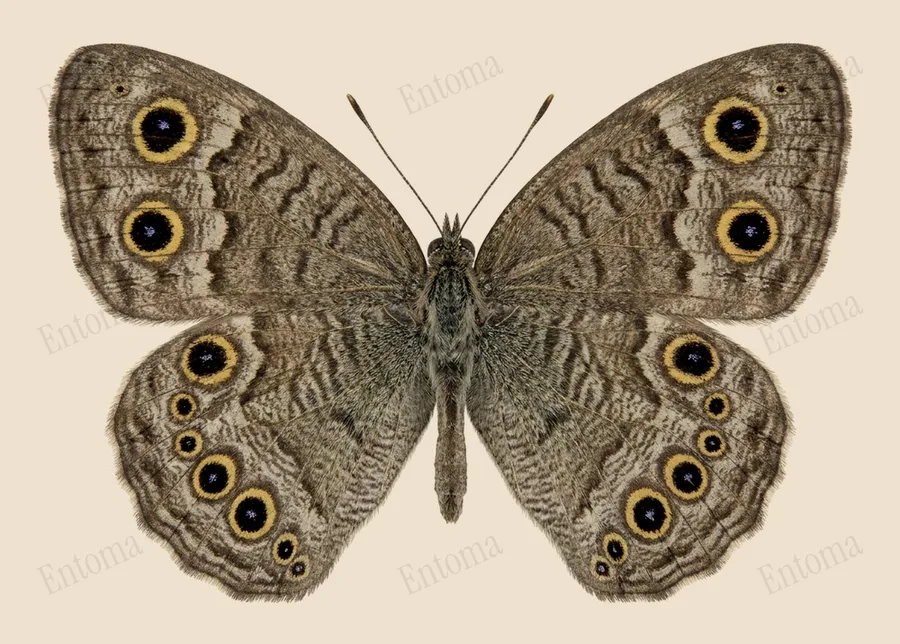
Striated ringlet
The Striated ringlet is named for the many fine, dense wavy lines banding its underside, more crowded than on most related ringlet butterflies sharing its range.
| Where | Forest margins, scrub and coastal woodland |
|---|---|
| Size | 35 to 40 mm wingspan |
| When | March to November |
The Striated ringlet is a small brown satyrid butterfly with a single eyespot near the forewing tip and a row of smaller eyespots along the hindwing margin. The underside is crossed by unusually dense, fine wavy grey white lines, giving the species its name.
Caterpillars feed on grasses in shaded forest margins, scrub and coastal woodland, and several generations follow one another through the warmer months. Adults fly close to the ground and settle often on low vegetation.
Traits
Habitat
Woodland
Colour
Brown, Grey
Active
Day
To people
Settles often on low vegetation; harmless to people.
Activity through the year
Often confused with
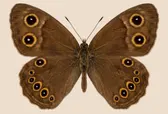
Common five ring shows fewer, bolder wavy lines on the underside, while the Striated ringlet's underside is crossed by unusually dense, fine wavy lines.
Questions
Is the Striated ringlet dangerous to people?
Settles often on low vegetation; harmless to people.
When can you see the Striated ringlet?
The Striated ringlet can be seen from March to November, by day.
Plate retouched from a photo by Cheng-Te Hsu, CC BY 4.0, iNaturalist Licence
Report a mistake in this entry
Butterflies and moths›Brush-footed butterflies›Ypthima
Last updated 2026-09-27. Every entry is checked against published sources.