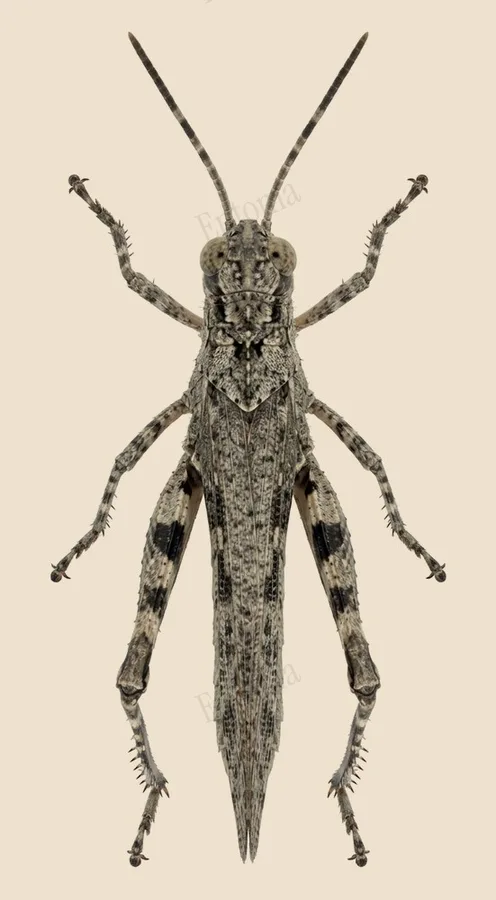
Carinate locust
Two small warty bumps on its back give this ground hugging grasshopper its Japanese name, and its mottled grey brown body all but vanishes against bare soil.
| Where | Bare open ground near buildings |
|---|---|
| Size | 18 to 35 mm body length |
| When | July to October |
Two small wart like bumps on the front of the thorax give this grasshopper its Japanese name, and its mottled grey brown body blends closely with bare, sun baked ground.
It favours patches of open soil with little vegetation, including unpaved lots and garden paths near houses, and flies up in short, clattering bursts when disturbed before dropping back to the ground.
Traits
Habitat
Towns
Colour
Brown, Grey
Active
Day
To people
Flies up in short hops when disturbed but does not bite; harmless to people.
Activity through the year
Often confused with
Lacks the two wart like tubercles on the front of the thorax that give this species its name, and instead shows red, blue and black banded hind shins.
Questions
Is the Carinate locust dangerous to people?
Flies up in short hops when disturbed but does not bite; harmless to people.
When can you see the Carinate locust?
The Carinate locust can be seen from July to October, by day.
Plate retouched from a photo by Jason Alexander, CC BY 4.0, iNaturalist Licence
Report a mistake in this entry
Crickets and grasshoppers›Grasshoppers›Trilophidia
Last updated 2026-09-27. Every entry is checked against published sources.