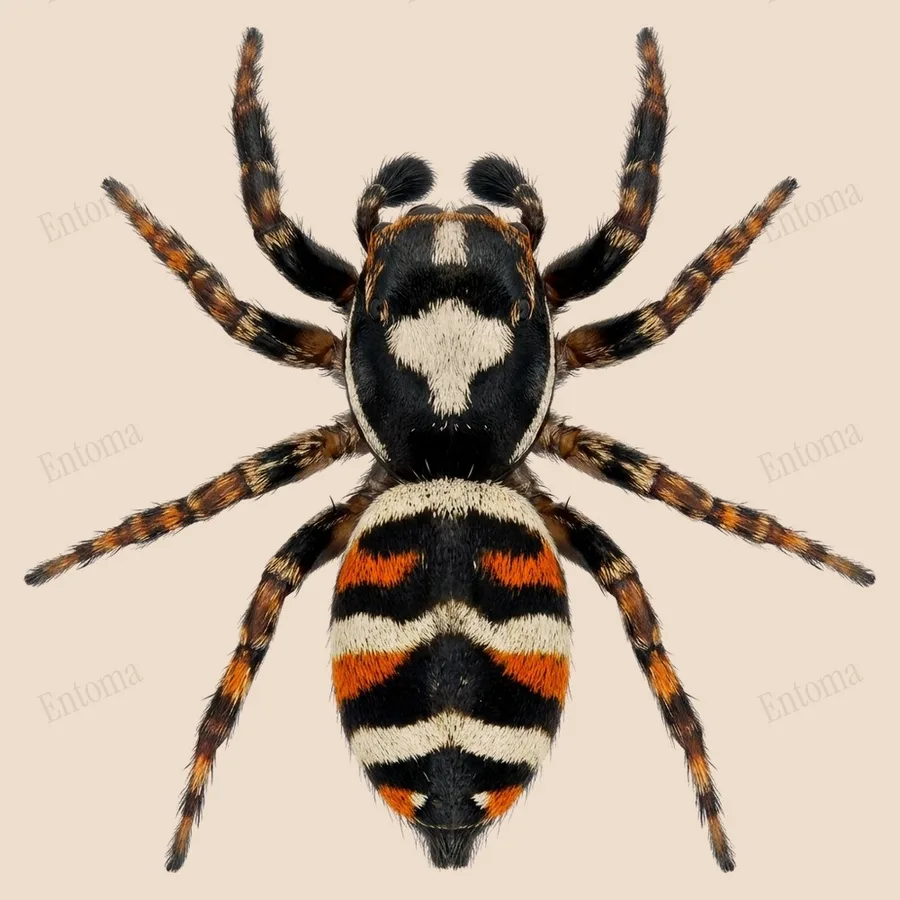
Ptocasius strupifer
Ptocasius strupifer was described from a single male in 1901, but its female remained unknown to science for another 84 years until one was finally described from Vietnamese specimens.
| Where | Forest floor and low vegetation |
|---|---|
| Size | About 5 to 7 mm body length |
| When | January to December |
Males are dark and glossy with a white stripe across the front of the thorax and a pale band crossing an otherwise blackish abdomen; females are dark brown with pearly white cross bands on the abdomen and are slightly smaller than males.
It is a ground and low vegetation dwelling jumping spider found from China to Vietnam, hunting by sight during the day like other jumping spiders, rather than catching prey in a web.
Traits
Habitat
Woodland
Colour
Black, White, Brown
Active
Day
To people
This small jumping spider is not known to bite people; like other jumping spiders it relies on excellent eyesight to hunt rather than posing any threat to humans.
Activity through the year
Often confused with
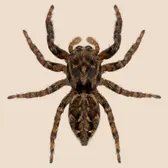
Similar overall size, but males of Adanson's house jumper show a bright red face mask and white banded palps, patterning entirely absent in the darker, plainer Ptocasius strupifer.
Questions
Is Ptocasius strupifer dangerous to people?
This small jumping spider is not known to bite people; like other jumping spiders it relies on excellent eyesight to hunt rather than posing any threat to humans.
When can you see Ptocasius strupifer?
Ptocasius strupifer can be seen from January to December, by day.
Plate retouched from a photo by portioid, CC BY 4.0, iNaturalist Licence
Report a mistake in this entry
Spiders›Jumping spiders›Ptocasius
Last updated 2026-09-27. Every entry is checked against published sources.