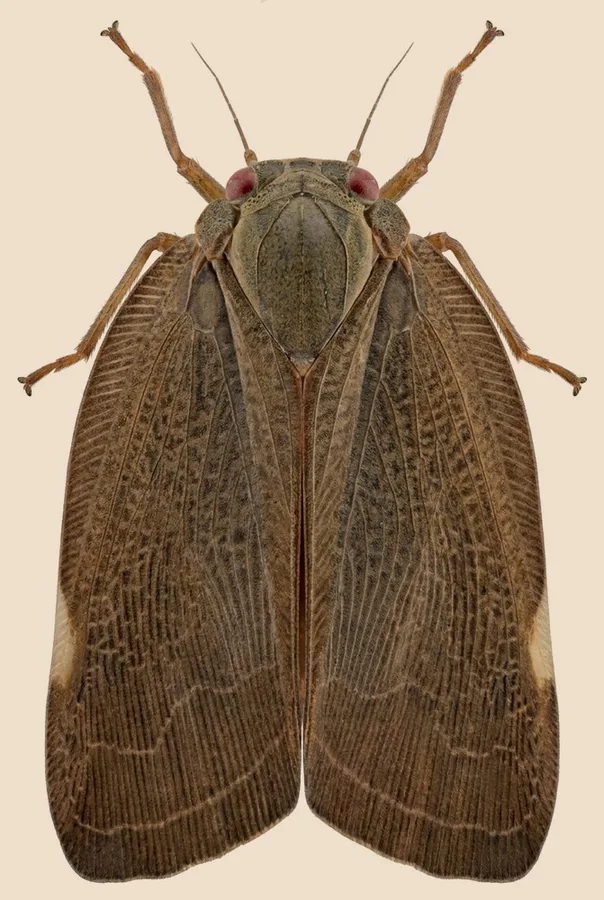
Brown winged plant hopper
Nymphs of this planthopper trail a tuft of white wax filaments longer than their own body, a moving fringe that can fool predators into missing the insect entirely.
| Where | Gardens, orchards and ornamental shrubs |
|---|---|
| Size | 5.5 to 8 mm body length |
| When | June to November |
Adults are brown to dark brown with a triangular, flattened profile and a single white spot near the outer edge of each forewing, reaching about 8 mm in body length with a wingspan near 30 mm. Nymphs look very different, pale and waxy, trailing long white filaments from the tip of the abdomen that can be longer than the body itself.
Eggs are laid in rows inside young twigs and overwinter there, with one or two generations completing each year across its range in China, Korea, Japan and beyond. Nymphs and adults feed on sap from a very wide range of trees and shrubs, and their sugary waste can encourage sooty mould on leaves.
Traits
Habitat
Garden
Colour
Brown, White
Active
Night
To people
Harmless to people; a sap-feeding pest of fruit trees and ornamental shrubs rather than a biting or stinging insect.
Activity through the year
Often confused with
Nearly identical in colour, wing pattern and size, with overlapping measurements; the two are reliably told apart only by male genitalia and forewing margin proportions, not by appearance in the field.
Questions
Is the Brown winged plant hopper dangerous to people?
Harmless to people; a sap-feeding pest of fruit trees and ornamental shrubs rather than a biting or stinging insect.
When can you see the Brown winged plant hopper?
The Brown winged plant hopper can be seen from June to November, at night.
Plate retouched from a photo by yawwhite, CC0, iNaturalist Licence
Report a mistake in this entry
True bugs›Ricaniid planthoppers›Pochazia
Last updated 2026-09-27. Every entry is checked against published sources.