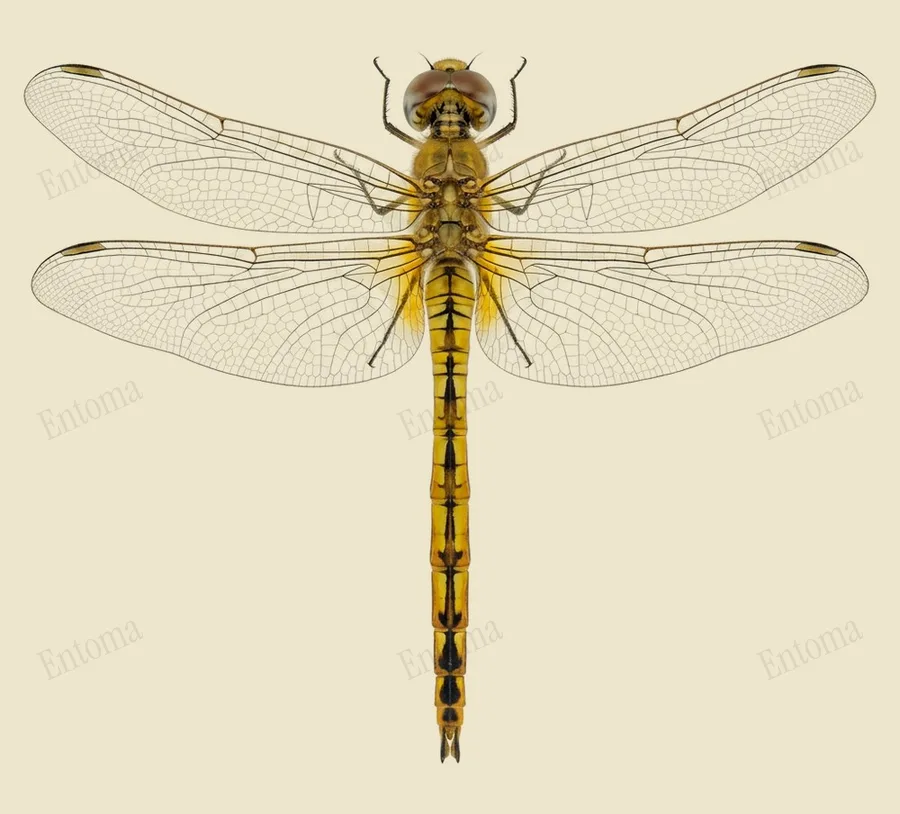
Wandering glider
This dragonfly has been tracked flying more than three thousand kilometres in a single crossing and recorded at over six thousand metres in the Himalayas.
| Where | Wetlands and open country across East Asia |
|---|---|
| Size | 80 to 90 mm wingspan |
| When | June to October |
The body and wings are pale golden-yellow, with males showing a reddish-yellow abdomen marked in black while females lack the reddish tone. The related Tramea virginia is larger bodied with reddish-brown patches at the wing bases and a reddish abdomen tipped black.
Eggs are laid in temporary pools, ditches and even puddles, and larvae can complete development in as little as five to nine weeks, letting the species colonise short-lived water and ride seasonal winds across entire oceans.
Traits
Habitat
Wetland
Colour
Yellow, Orange
Active
Day
To people
Harmless to people; often seen gliding high over open fields far from any water.
Activity through the year
Often confused with
Larger bodied at 51 to 58 mm with reddish-brown patches at the wing bases and a reddish abdomen tipped black, where the Wandering glider is plain pale yellow throughout.
Questions
Is the Wandering glider dangerous to people?
Harmless to people; often seen gliding high over open fields far from any water.
When can you see the Wandering glider?
The Wandering glider can be seen from June to October, by day.
Plate retouched from a photo by Vihansith Kulatunga, CC BY‑SA 4.0, iNaturalist Licence
The plate on this page is shared under the same licence as its source, CC BY-SA.
Report a mistake in this entry
Dragonflies and damselflies›Skimmers›Pantala
Last updated 2026-09-27. Every entry is checked against published sources.