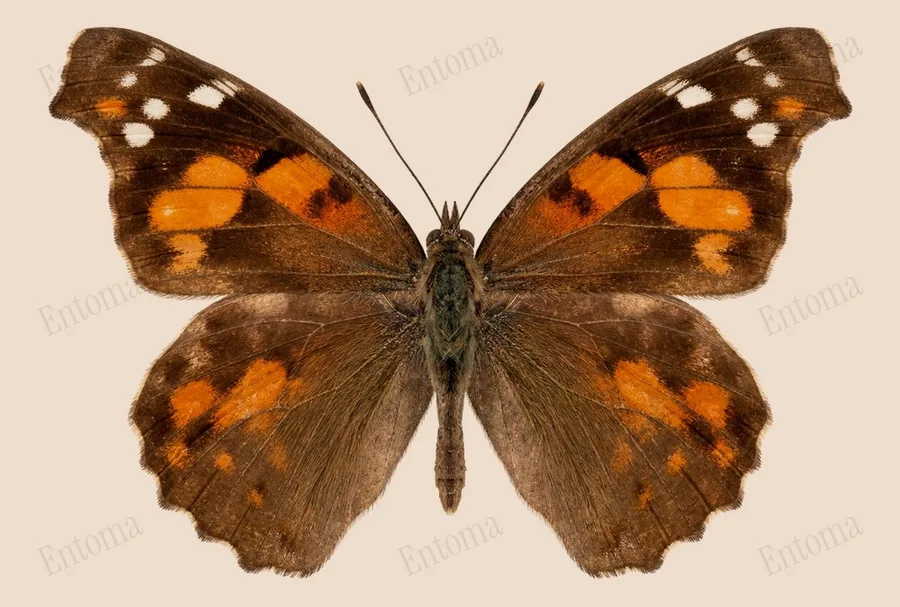
Common beak
This snout butterfly's long palps look like a beak, and adults hibernate through winter to become one of the first butterflies seen flying again in early spring.
| Where | Forests and woodland edges, East Asia |
|---|---|
| Size | 19 to 30 mm forewing length |
| When | March to October |
The Common beak is a dark brown butterfly with orange yellow patches on the forewings and long, forward pointing palps that give the head a beak like profile, a feature that gives the whole subfamily its name.
Caterpillars feed on hackberry trees, and the single generation of adults hibernates as a fully grown butterfly through winter, sheltering under bark or similar cover before flying again from spring into autumn.
Traits
Habitat
Woodland
Colour
Brown, Orange
Active
Day
To people
Does not bite or sting; harmless to people.
Activity through the year
Often confused with
Has broader and more variable orange yellow markings on the upperside, and lacks the dark greyish hindwing underside of the Common beak.
Questions
Is the Common beak dangerous to people?
Does not bite or sting; harmless to people.
When can you see the Common beak?
The Common beak can be seen from March to October, by day.
Plate retouched from a museum specimen photo by Naturalis Biodiversity Center, CC0, GBIF Licence
Report a mistake in this entry
Butterflies and moths›Brush-footed butterflies›Libythea
Last updated 2026-09-27. Every entry is checked against published sources.