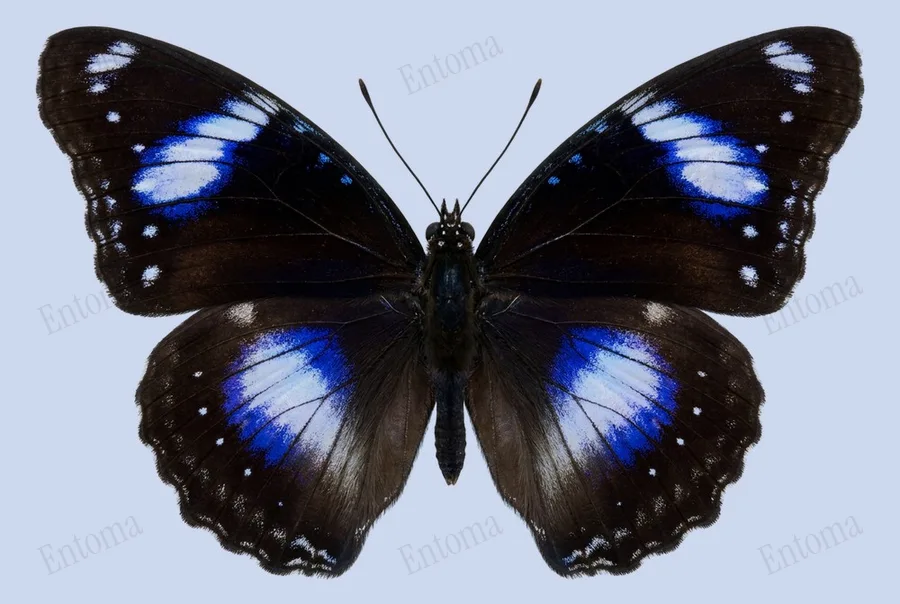
Great eggfly
Only female Great eggflies mimic toxic Euploea crow butterflies; males instead patrol favourite perches and dart out to investigate every passing insect.
| Where | Forests, gardens and disturbed ground |
|---|---|
| Size | 70 to 90 mm wingspan |
| When | March to November |
Male Great eggflies are glossy black with white spots ringed in blue violet, while females vary widely, some plain and others patterned with orange or blue patches that copy unrelated, distasteful species.
Caterpillars are black with branched orange spines and feed at night on a wide range of low, weedy plants, and males spend much of the day guarding a chosen perch against rival butterflies.
Traits
Habitat
Woodland
Colour
Black, White, Blue
Active
Day
To people
Males sometimes settle on people while patrolling for mates; harmless to handle.
Activity through the year
Often confused with
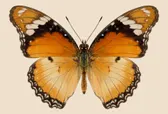
Females mimic the orange and black toxic Danaus chrysippus closely, unlike female Great eggflies, which keep white spotted black or blue tinted wings.
Questions
Is the Great eggfly dangerous to people?
Males sometimes settle on people while patrolling for mates; harmless to handle.
When can you see the Great eggfly?
The Great eggfly can be seen from March to November, by day.
Plate retouched from a museum specimen photo by Swiss Natural History Collections - SwissNatColl, CC BY 4.0, GBIF Licence
Report a mistake in this entry
Butterflies and moths›Brush-footed butterflies›Hypolimnas
Last updated 2026-09-27. Every entry is checked against published sources.