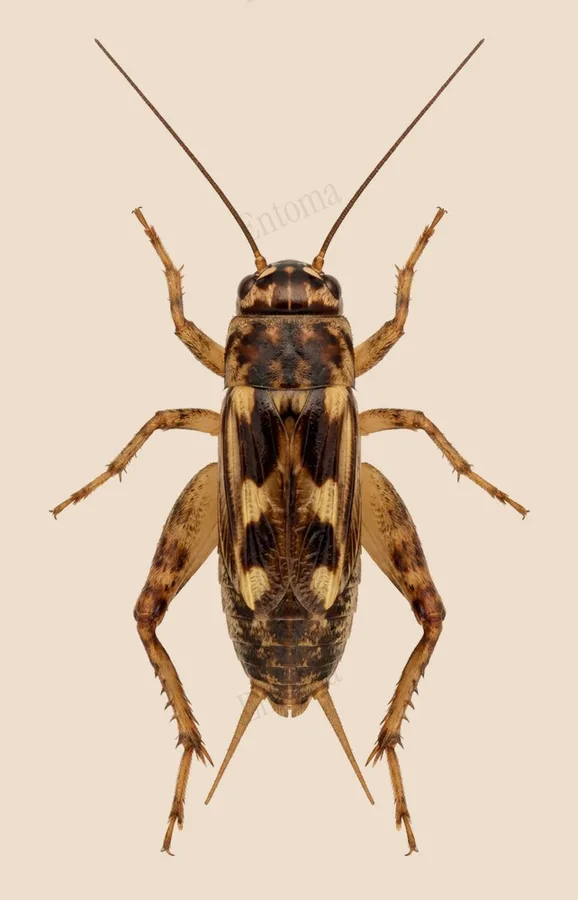
Cardiodactylus guttulus
This tree cricket calls by day as well as after dark, with dozens sometimes packed onto a single trunk, producing a sound compared to scissors trimming hair.
| Where | Subtropical island forests, on tree trunks |
|---|---|
| Size | 36 to 42 mm body length |
| When | June to December |
This is a fairly large, forest dwelling cricket with tea brown forewings marked by conspicuous yellow spots; males carry bolder, more numerous markings than the plainer females, which are told apart by a long ovipositor at the tip of the abdomen.
Adults gather in numbers on the trunks of forest trees, calling both during the day and at night, with song most active after dark. Nymphs hatch in early spring and shelter in leaf litter before climbing onto trunks as they mature.
Traits
Habitat
Woodland
Colour
Brown, Yellow
Active
Day and night
To people
Calls from tree trunks after dark; harmless to people.
Activity through the year
Often confused with
Japanese green cricket is bright green and considerably smaller at about 20 to 25 mm long, against this species' tea brown, yellow spotted body of 36 to 42 mm.
Questions
Is Cardiodactylus guttulus dangerous to people?
Calls from tree trunks after dark; harmless to people.
When can you see Cardiodactylus guttulus?
Cardiodactylus guttulus can be seen from June to December, by day and at night.
Plate retouched from a museum specimen photo by Laure Desutter-Grandcolas, MNHN - Museum national d'Histoire naturelle, CC BY 4.0, GBIF Licence
Report a mistake in this entry
Crickets and grasshoppers›True crickets›Cardiodactylus
Last updated 2026-09-27. Every entry is checked against published sources.