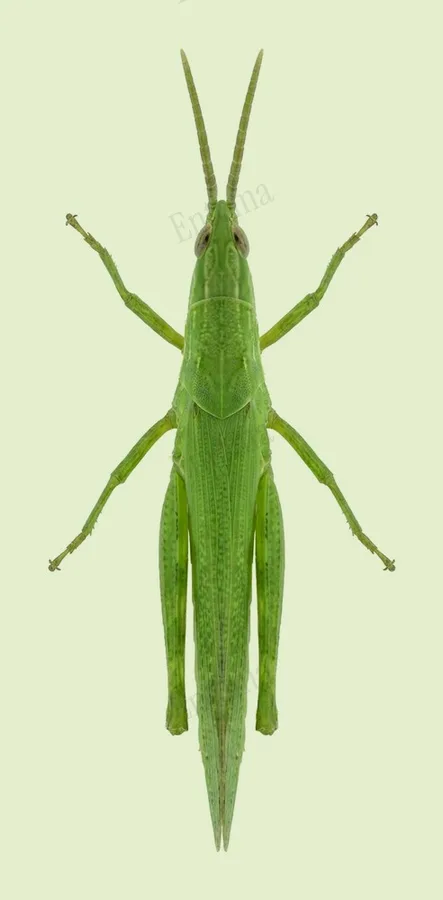
Atractomorpha lata
Small winged males often ride pressed against a female's back for days at a time, defending her from rivals long before mating actually begins.
| Where | Grassland, meadows and flowerbeds |
|---|---|
| Size | 20 to 42 mm body length |
| When | July to November |
This slender, rhombus-headed grasshopper is green or pale brown depending on habitat, with a body that tapers to a point at the front of the head; females reach about 40 to 42 mm in length while males are much smaller, at around 20 to 25 mm.
It is common in grassland, meadows and flowerbeds across Japan, Korea and neighbouring parts of East Asia, feeding on a wide range of low plants including kudzu, and is active from summer into autumn.
Traits
Habitat
Grassland
Colour
Green, Brown
Active
Day
To people
Harmless to people; a plant-feeding grasshopper with no bite or sting of concern.
Activity through the year
Often confused with
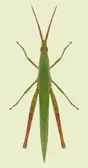
Shares the same elongated, pointed head shape and green colouring but is far larger, with males reaching 40 to 50 mm and females 70 to 80 mm, roughly double the length of this species.
Questions
Is Atractomorpha lata dangerous to people?
Harmless to people; a plant-feeding grasshopper with no bite or sting of concern.
When can you see Atractomorpha lata?
Atractomorpha lata can be seen from July to November, by day.
Plate retouched from a photo by Yoshihiro Tokue, CC BY 4.0, iNaturalist Licence
Report a mistake in this entry
Crickets and grasshoppers›Gaudy grasshoppers›Atractomorpha
Last updated 2026-09-27. Every entry is checked against published sources.