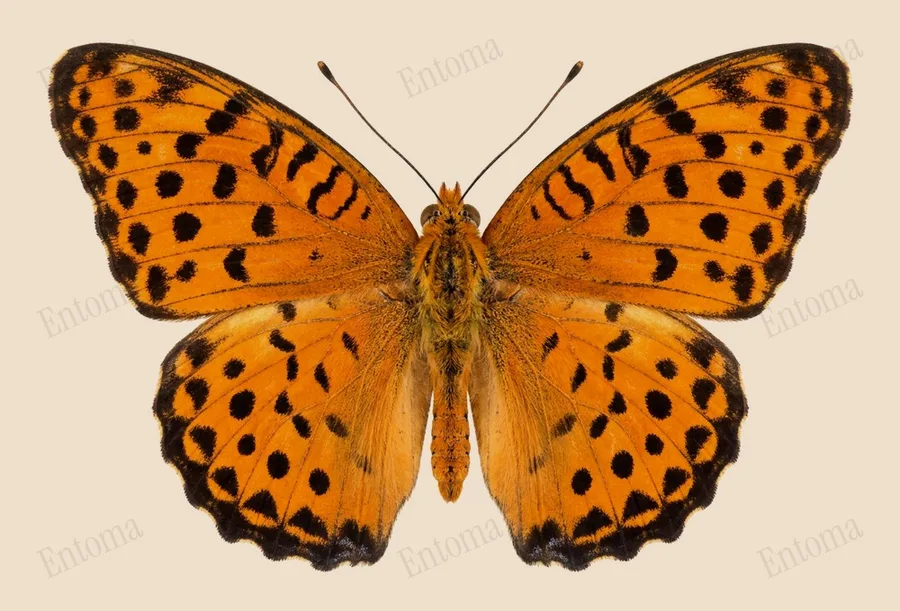
Tropical fritillary
Despite its tropical name, this fritillary breeds on garden pansies and violets, letting it colonise parks and gardens far north of its original range.
| Where | Grassy parks and open hillsides |
|---|---|
| Size | 80 to 98 mm wingspan |
| When | April to November |
Males are bright orange with black spots, streaks and bands in a leopard like pattern, while females share the same orange base colour but have black forewing tips crossed by a bold white diagonal band.
Caterpillars feed on violets and pansies, and in warm parts of its East Asian range this species can produce several generations a year, staying on the wing from spring into late autumn.
Traits
Habitat
Grassland
Colour
Orange, Black, White
Active
Day
To people
Harmless to people; adults visit garden flowers for nectar and cause no harm when handled.
Activity through the year
Often confused with
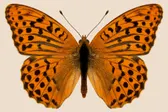
Similar orange and black upperside, but told apart by its green underside marked with broad, curved silvery bands, unlike the Tropical fritillary's plain orange or black wingtips.
Questions
Is the Tropical fritillary dangerous to people?
Harmless to people; adults visit garden flowers for nectar and cause no harm when handled.
When can you see the Tropical fritillary?
The Tropical fritillary can be seen from April to November, by day.
Plate retouched from a photo by Jan Ebr & Ivana Ebrová, CC BY 4.0, iNaturalist Licence
Report a mistake in this entry
Butterflies and moths›Brush-footed butterflies›Argynnis
Last updated 2026-09-27. Every entry is checked against published sources.