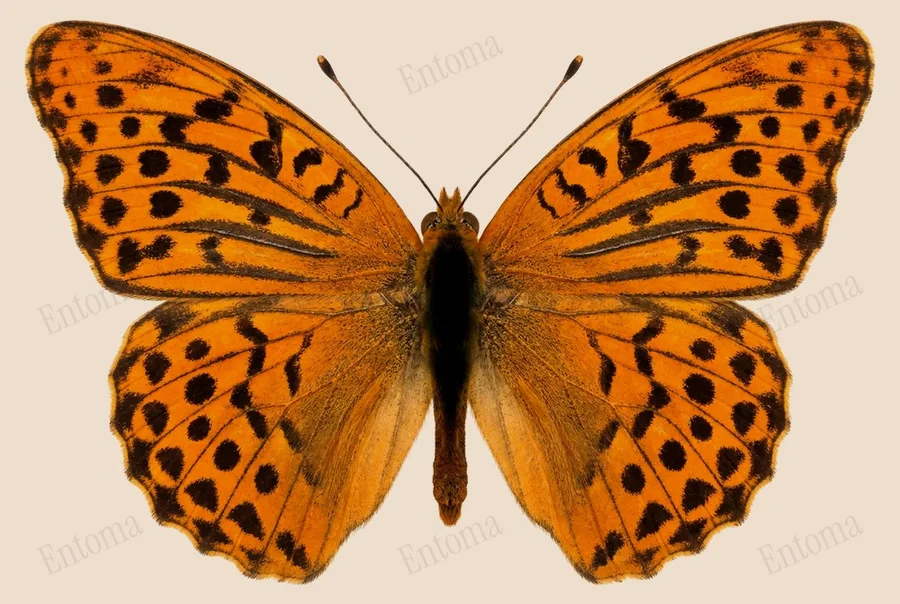
Silver-washed fritillary
Some females are a dark olive-green form called valezina instead of orange, and in flight can be mistaken for a completely different butterfly.
| Where | Broadleaved woodland rides and clearings |
|---|---|
| Size | 54 to 80 mm wingspan |
| When | June to August |
It is one of the largest fritillaries in its range, orange above with black markings, and shows broad silvery-green bands on the underside that give it its name.
Males patrol woodland rides in a strong, gliding flight, and females lay eggs on tree bark near violets rather than on the foodplant itself.
Traits
Habitat
Woodland
Colour
Orange, Black, Green
Active
Day
To people
Harmless
Activity through the year
Often confused with
The dark green fritillary is smaller and lacks the broad silvery-green underside bands of the silver-washed fritillary.
Questions
Is the Silver-washed fritillary dangerous to people?
The Silver-washed fritillary is harmless to people.
When can you see the Silver-washed fritillary?
The Silver-washed fritillary can be seen from June to August, by day.
Plate retouched from a photo by NSG group from Lund, Sweden, CC0, Wikimedia Commons Licence
Report a mistake in this entry
Butterflies and moths›Brush-footed butterflies›Argynnis
Last updated 2026-09-26. Every entry is checked against published sources.