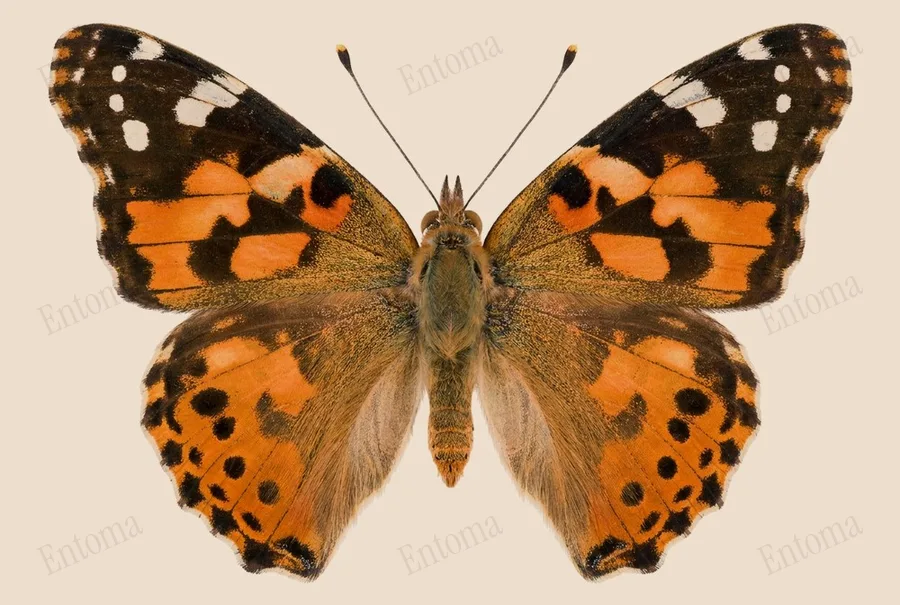
Painted lady
Its autumn journey home to Africa happens so high in the sky, often several hundred metres up, that people almost never see it leaving.
| Where | Open flowery ground, gardens, coastal habitats |
|---|---|
| Size | 51 to 74 mm wingspan |
| When | May to September |
It is an orange, black and white butterfly with a checkered wing pattern, similar in size to a small tortoiseshell but paler and without the tortoiseshell's blue spots.
It cannot survive northern winters, so each year's population in northern Europe arrives as migrants from North Africa and the Mediterranean, breeds, and a later generation flies south again in autumn.
The caterpillars feed mainly on thistles, such as species of Cirsium and Carduus. The number of migrants varies enormously from year to year, with vast numbers arriving in some years and far fewer in others. The pattern of arrival is erratic rather than regular.
Traits
Habitat
Grassland
Colour
Orange, Black, White
Active
Day
To people
Harmless
Activity through the year
Often confused with
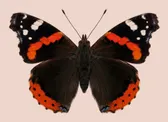
The red admiral has bold red-orange bands on a black background rather than the painted lady's overall orange, checkered pattern.
Read more in the guides
Insects that migrateQuestions
Is the Painted lady dangerous to people?
The Painted lady is harmless to people.
When can you see the Painted lady?
The Painted lady can be seen from May to September, by day.
Sources butterfly-conservation.orgen.wikipedia.orgncbi.nlm.nih.govukbutterflies.co.ukdimensions.comukbms.org
Plate retouched from a photo by Didier Descouens, CC BY‑SA 4.0, Wikimedia Commons Licence
The plate on this page is shared under the same licence as its source, CC BY-SA.
Report a mistake in this entry
Butterflies and moths›Brush-footed butterflies›Vanessa
Last updated 2026-10-17. Every entry is checked against published sources.