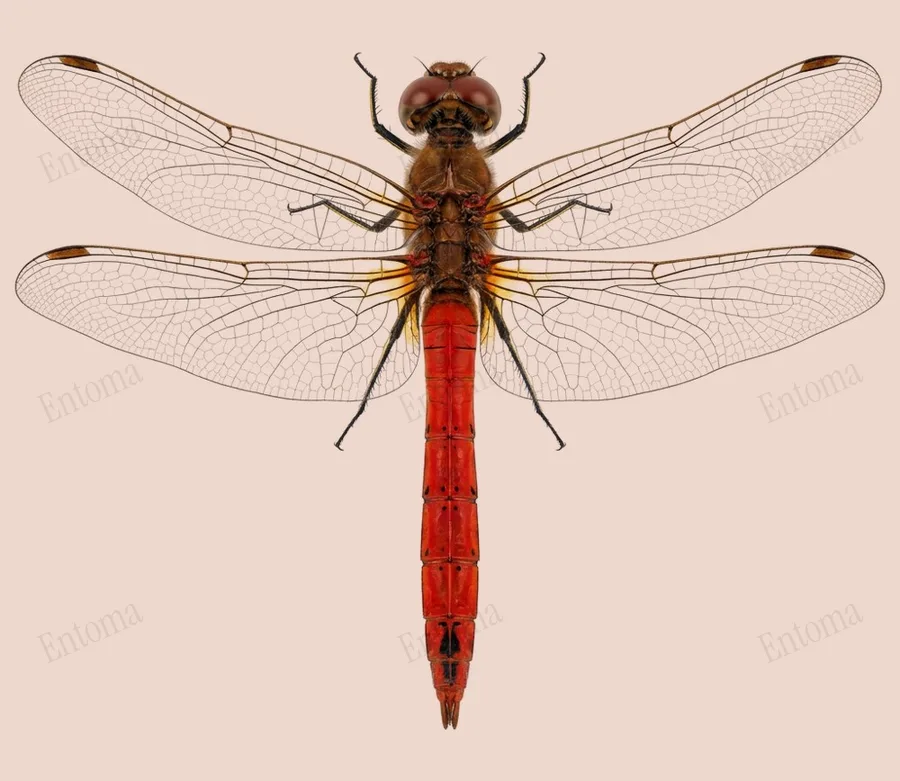
Vagrant darter
This dragonfly gets its common name from its habit of straying north of its usual range as an occasional vagrant, sometimes turning up far from breeding sites.
| Where | Shallow ponds, ditches and gravel pits |
|---|---|
| Size | 50 to 58 mm wingspan |
| When | July to October |
Mature males have a brick red, slightly club shaped abdomen and a plain brown thorax, with legs striped black and yellow, while females are orange yellow. Both sexes show a dark moustache like mark that extends down the sides of the face.
It breeds in shallow standing water such as ditches, ponds, and flooded gravel pits with dense vegetation, and is a strong flier often seen resting on bushes or bare ground. Adults are on the wing from summer into autumn.
Traits
Habitat
Wetland
Colour
Red, Yellow, Black
Active
Day
To people
Harmless to people; does not sting or bite and can be approached closely while resting.
Activity through the year
Often confused with
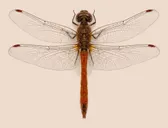
Very similar but slightly larger at about 48 to 60 mm wingspan, and lacking the black leg stripes and dark moustache mark of the Vagrant darter.
Questions
Is the Vagrant darter dangerous to people?
Harmless to people; does not sting or bite and can be approached closely while resting.
When can you see the Vagrant darter?
The Vagrant darter can be seen from July to October, by day.
Plate retouched from a museum specimen photo by Mati Marits, University of Tartu, Natural History Museum and Botanical Garden, CC BY 4.0, GBIF Licence
Report a mistake in this entry
Dragonflies and damselflies›Skimmers›Sympetrum
Last updated 2026-09-26. Every entry is checked against published sources.