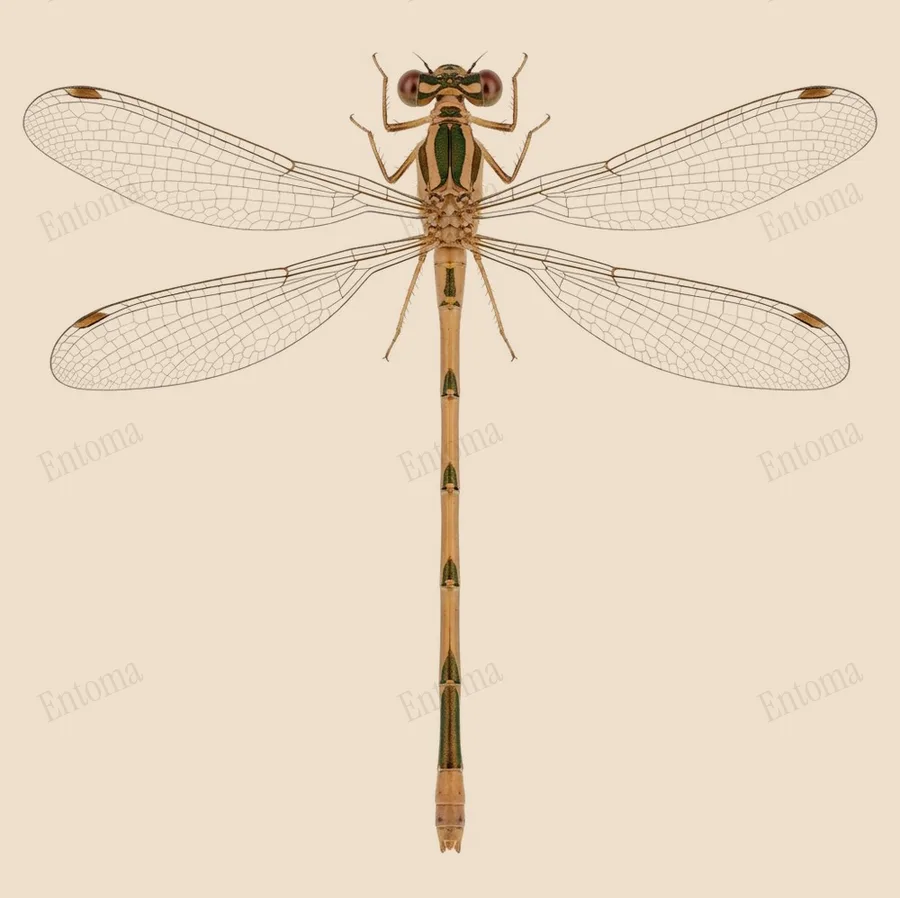
Common winter damselfly
This drab brown damselfly survives winter as an adult, one of only two European damselfly species able to do so, becoming active again as temperatures rise in spring.
| Where | Vegetated ponds, marshes and damp grassland |
|---|---|
| Size | 34 to 39 mm body length |
| When | March to October |
The Common winter damselfly is a dull pale brown insect with darker brown stripes along the thorax and bomb shaped markings on the upper abdomen, lacking the bright blue or red seen in most European damselflies. Its plain coloring and drab tone make it easy to overlook among dry grass stems.
It breeds around still, well vegetated water such as ponds and marshes with floating dead reeds, but after emerging it moves away from water to spend winter resting on dry plant stems in open grassland and heath. It is one of only two European damselfly species that survive the cold season as adults, becoming active again in spring.
Traits
Habitat
Wetland
Colour
Brown
Active
Day
To people
Does not bite or sting and is harmless to handle.
Activity through the year
Often confused with
Nearly identical and also overwinters as an adult, but is darker and more subdued in color, distinguished by a small bulge on the thorax stripe about two thirds of the way along.
Questions
Is the Common winter damselfly dangerous to people?
Does not bite or sting and is harmless to handle.
When can you see the Common winter damselfly?
The Common winter damselfly can be seen from March to October, by day.
Plate retouched from a museum specimen photo by Mati Marits, University of Tartu, Natural History Museum and Botanical Garden, CC BY 4.0, GBIF Licence
Report a mistake in this entry
Dragonflies and damselflies›Spreadwings›Sympecma
Last updated 2026-09-26. Every entry is checked against published sources.