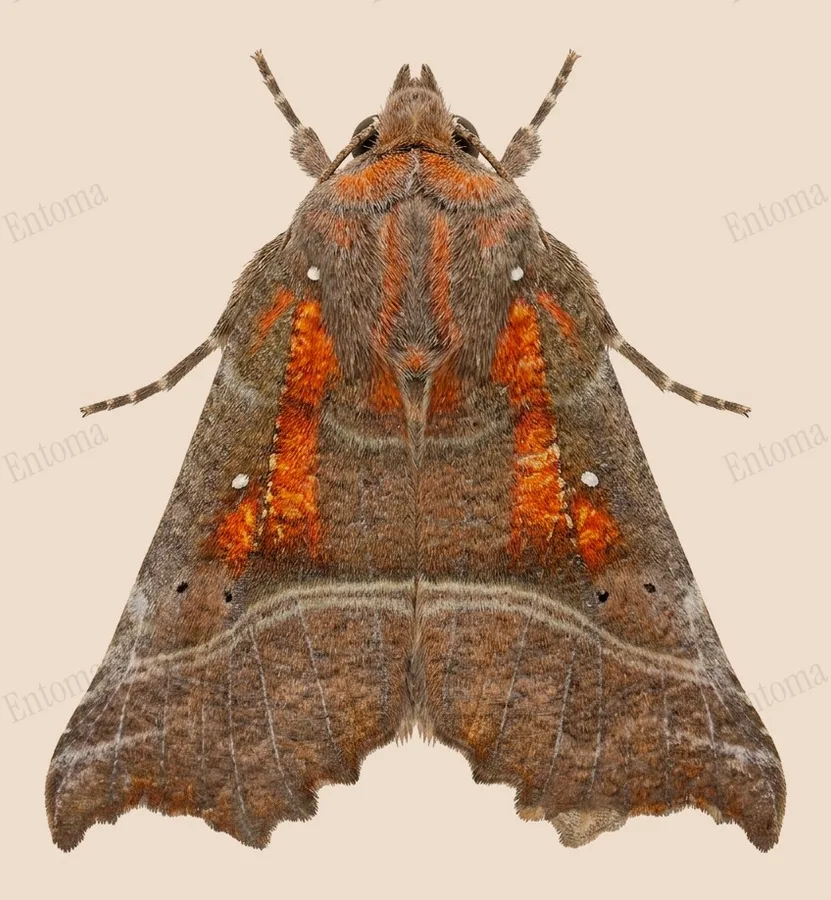
Herald
This moth overwinters as an adult in caves and sheds, surviving far longer than most moths, and can appear in both autumn and the following spring.
| Where | Broadleaved woodland, hedgerows and gardens |
|---|---|
| Size | 40 to 45 mm wingspan |
| When | January to October |
The Herald has a wingspan of about 40 to 45 mm and strongly hooked, scalloped forewings in dark brown with bright orange blotches near the base, a shape that makes the resting moth resemble a curled, withered leaf.
Caterpillars feed on willow and poplar leaves through summer, and the adults that emerge in late summer seek out cool, sheltered spots such as caves, sheds or hollow trees to pass the winter before flying again in spring.
Traits
Habitat
Woodland
Colour
Brown, Orange
Active
Night
To people
Attracted to light; harmless to people.
Activity through the year
Often confused with
Also has hooked, scalloped wingtips, but is notably smaller at 27 to 35 mm wingspan and paler orange-brown, without the Herald's bold dark orange blotches near the wing base.
Questions
Is the Herald dangerous to people?
Attracted to light; harmless to people.
When can you see the Herald?
The Herald can be seen from January to October, at night.
Plate retouched from a photo by Donald Hobern from Copenhagen, Denmark, CC BY 2.0, Wikimedia Commons Licence
Report a mistake in this entry
Butterflies and moths›Erebid moths›Scoliopteryx
Last updated 2026-09-26. Every entry is checked against published sources.