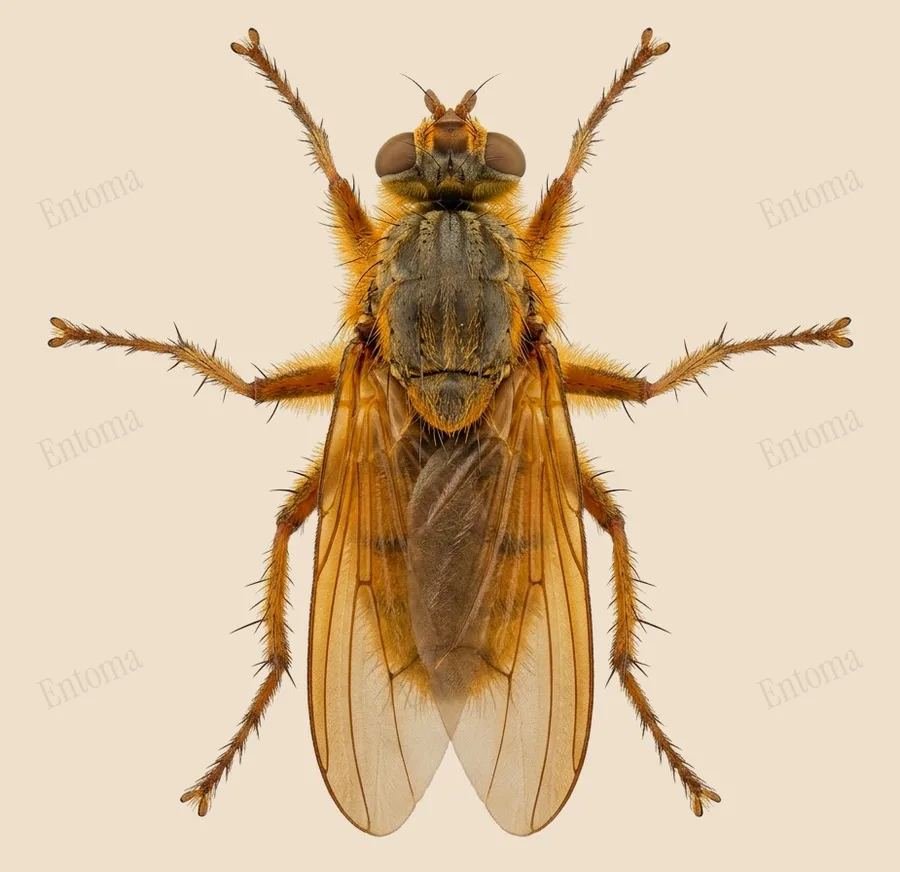
Golden dung fly
Adult Golden Dung Flies are active predators, ambushing and eating other insects around the same dung pats where they mate and lay eggs.
| Where | Farmland, pastures and grazed fields |
|---|---|
| Size | 5 to 11 mm body length |
| When | March to November |
Male Golden Dung Flies are covered in bright golden-yellow fur, especially on the front legs, while females are duller olive-brown and lack the golden pile. Both sexes have solid black antennae and a densely haired patch beneath the wing base.
Adults gather on fresh cow and horse dung, where males compete for mates while females lay their eggs, and both sexes also hunt smaller flies for food. The species stays active through most of the year wherever mild weather and livestock dung allow.
Traits
Habitat
Farmland
Colour
Yellow, Brown
Active
Day
To people
Does not bite people; adults spend their time hunting smaller insects around livestock dung.
Activity through the year
Often confused with
It has a paler yellow thorax with pale antennae and palps, unlike the black antennae and richer golden fur of male Golden Dung Flies.
Questions
Is the Golden dung fly dangerous to people?
Does not bite people; adults spend their time hunting smaller insects around livestock dung.
When can you see the Golden dung fly?
The Golden dung fly can be seen from March to November, by day.
Plate retouched from a photo by pearcefamily, CC BY 4.0, iNaturalist Licence
Report a mistake in this entry
Last updated 2026-09-26. Every entry is checked against published sources.