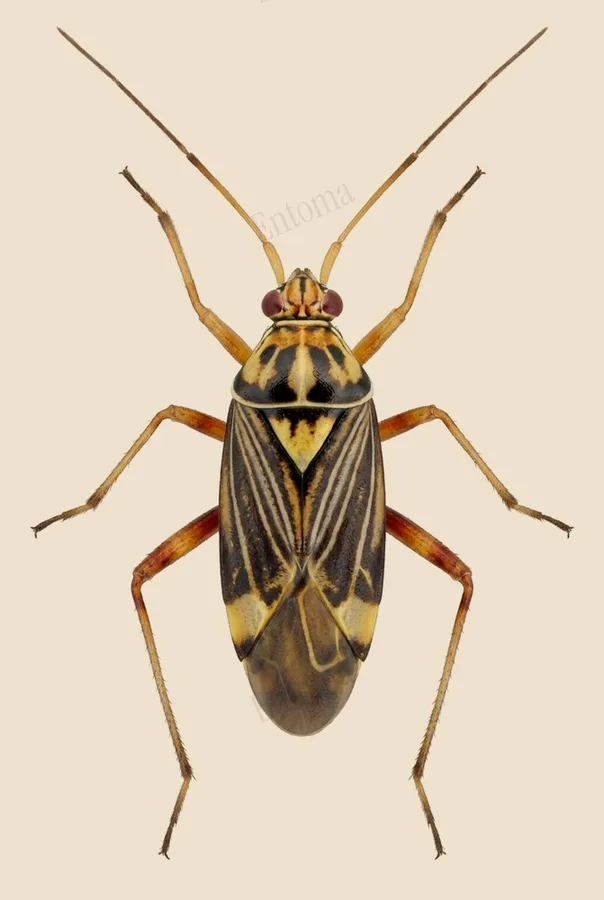
Striped oak bug
Nymphs of this bug suck sap from oak flowers and young seeds, but the adults turn predatory, hunting aphids and small caterpillars on the same tree.
| Where | Oak trees in woodland and parkland |
|---|---|
| Size | 7 to 9 mm body length |
| When | April to June |
The body is yellow to reddish brown with yellow veins and dark stripes on the wings, and females are usually paler than males. A yellow-orange cuneus at the wing tip helps distinguish it from the larger, darker headed fine streaked bugkin.
Eggs laid in June overwinter and hatch in March or April. Nymphs feed on oak flowers and unripe seeds, while adults, present from April to June, become predatory, hunting aphids and small caterpillars on the same tree.
Traits
Habitat
Woodland
Colour
Yellow, Brown
Active
Day
To people
Harmless to people; a useful predator of aphids and small caterpillars on oak.
Activity through the year
Often confused with
Larger, 9 to 11 mm, with an entirely dark head and a more elongate body, compared with the smaller striped oak bug and its yellow-orange cuneus.
Questions
Is the Striped oak bug dangerous to people?
Harmless to people; a useful predator of aphids and small caterpillars on oak.
When can you see the Striped oak bug?
The Striped oak bug can be seen from April to June, by day.
Plate retouched from a photo by Fritz Geller-Grimm, CC BY‑SA 3.0, Wikimedia Commons Licence
The plate on this page is shared under the same licence as its source, CC BY-SA.
Report a mistake in this entry
True bugs›Plant bugs›Rhabdomiris
Last updated 2026-09-26. Every entry is checked against published sources.