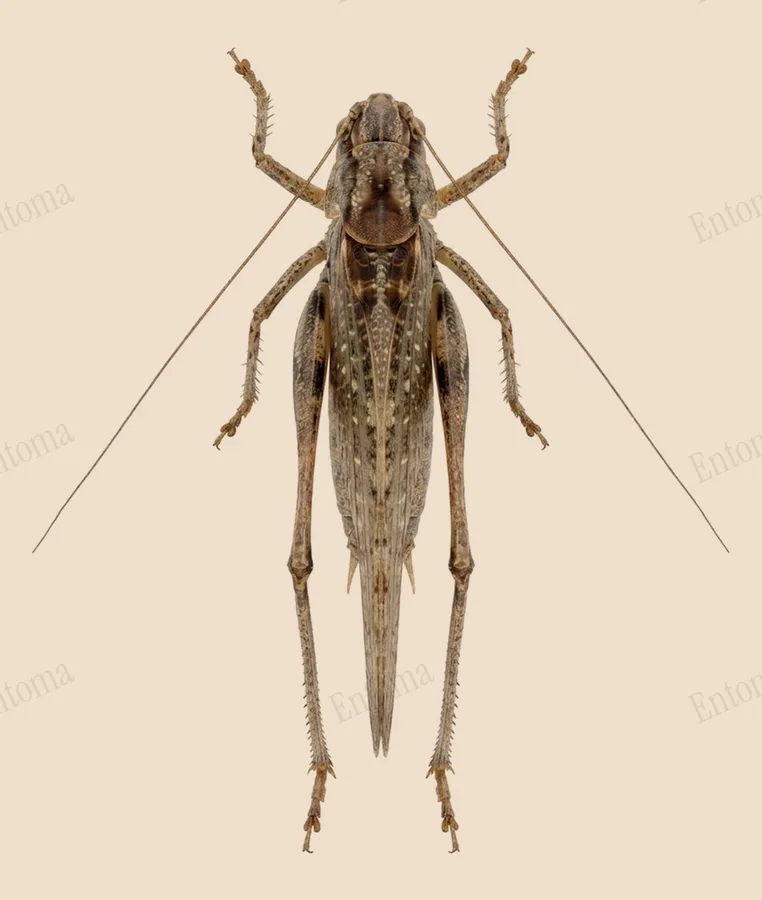
Grey bush-cricket
The Grey Bush-cricket thrives on shifting coastal shingle and dunes, habitats too loose and exposed for most other bush-crickets to settle in.
| Where | Coastal dunes, shingle and cliffs |
|---|---|
| Size | 16 to 30 mm body length |
| When | May to September |
The Grey Bush-cricket is grey to light brown above with a paler, sometimes greenish underside, and its hind thighs carry a dark fish-bone pattern; both sexes are fully winged and females carry a long, upturned black ovipositor.
It lives on coastal dunes, shingle banks and cliffs among rough grass and low scrub, feeding on both plant material and other insects. Nymphs appear in spring and adults are on the wing from midsummer into autumn.
Traits
Habitat
Coast
Colour
Grey, Brown
Active
Day
To people
Harmless to people; it feeds on both plants and other insects but poses no risk itself.
Activity through the year
Often confused with
It favours warm Mediterranean scrub and garrigue further south and east, while the Grey Bush-cricket reaches the Atlantic coast and typically stays on coastal dunes and shingle.
Questions
Is the Grey bush-cricket dangerous to people?
Harmless to people; it feeds on both plants and other insects but poses no risk itself.
When can you see the Grey bush-cricket?
The Grey bush-cricket can be seen from May to September, by day.
Plate retouched from a photo by carnifex, CC BY 4.0, iNaturalist Licence
Report a mistake in this entry
Crickets and grasshoppers›Bush crickets›Platycleis
Last updated 2026-09-26. Every entry is checked against published sources.