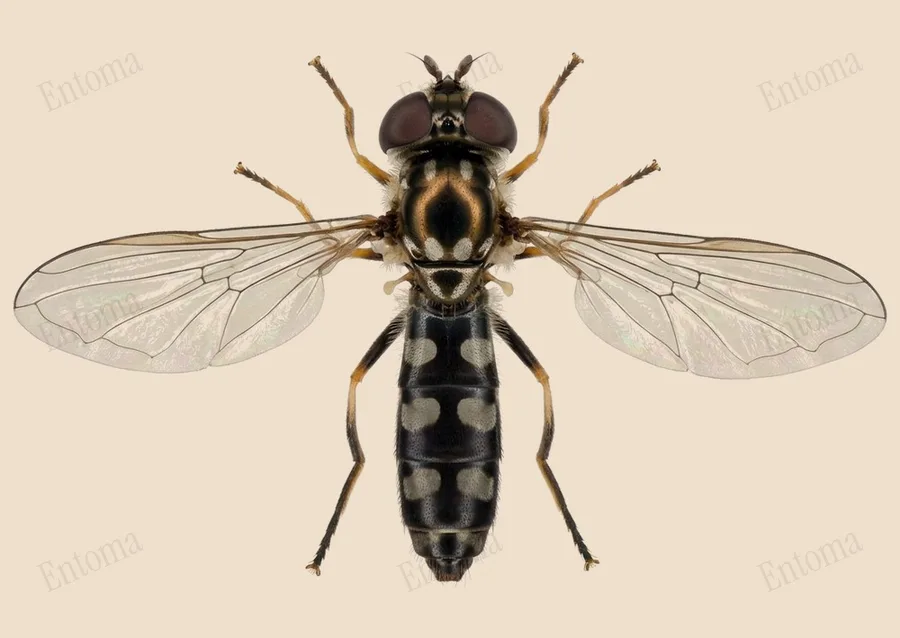
Grey-spotted sedgesitter
This tiny hoverfly is often among the first of its kind on the wing, appearing in sunshine as early as mid-February, weeks before most others emerge.
| Where | Woodland margins, hedgerows and gardens |
|---|---|
| Size | 6 to 10 mm body length |
| When | March to October |
The Grey-spotted sedgesitter is a small hoverfly, 6 to 10 mm long, with pairs of grey-silver spots along the abdomen that take on a bronze tint in males. Males also have tangled hairs at the base of the front leg and a pale swelling near its tip.
Larvae feed on aphids on a wide range of low plants, shrubs and trees. Adults have a very long flying season and can appear in sheltered woodland margins, hedgerows and gardens on sunny days from late winter through autumn.
Traits
Habitat
Garden
Colour
Grey
Active
Day
To people
Harmless to people; adults visit garden flowers for nectar and pollen.
Activity through the year
Often confused with
Very similar in size at about 7 to 9 mm, but males show denser tufts of hair on the front leg and duller, less bronzed abdominal spots than the Grey-spotted sedgesitter.
Questions
Is the Grey-spotted sedgesitter dangerous to people?
Harmless to people; adults visit garden flowers for nectar and pollen.
When can you see the Grey-spotted sedgesitter?
The Grey-spotted sedgesitter can be seen from March to October, by day.
Plate retouched from a museum specimen photo by Rune Kristiansen, Norwegian Biodiversity Information Centre, CC BY 4.0, GBIF Licence
Report a mistake in this entry
Last updated 2026-09-26. Every entry is checked against published sources.