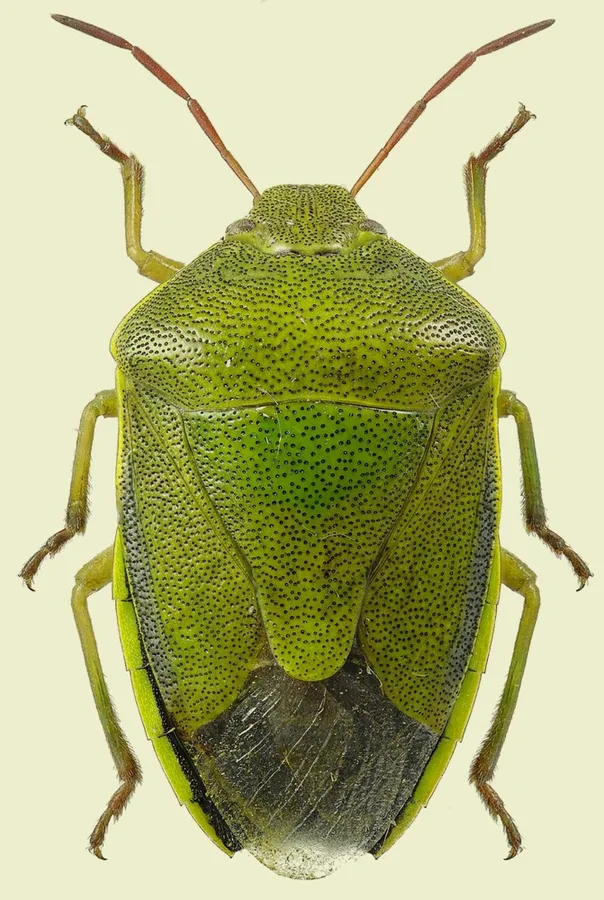
Gorse shield bug
This shield bug changes color completely between generations, from spring green to a wine purple in late summer, before dulling for winter.
| Where | Gorse and broom scrub on heathland |
|---|---|
| Size | 10 to 13 mm body length |
| When | March to October |
This is a large, smoothly rounded shield bug with red antennae, which helps separate it from the similarly sized common green shieldbug. Spring adults are plain green, while the new generation that appears in late summer shows purplish red across the pronotum and wing bases before darkening further ahead of hibernation.
Adults and nymphs feed and breed mainly on gorse and broom, laying eggs on the flowers and foliage of these shrubs, with a single generation completing its life cycle each year.
Traits
Habitat
Heath
Colour
Green, Red
Active
Day
To people
Harmless to handle; like other shield bugs it can release a strong smelling fluid from glands on its body when disturbed, mainly as a taste and scent deterrent to predators rather than a skin irritant.
Activity through the year
Often confused with
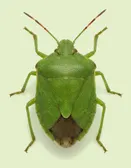
Slightly larger at 12 to 13.5 mm and lacking red antennae, this shieldbug also turns bronze brown before winter but is found more broadly on trees and shrubs rather than specifically on gorse.
Questions
Is the Gorse shield bug dangerous to people?
Harmless to handle; like other shield bugs it can release a strong smelling fluid from glands on its body when disturbed, mainly as a taste and scent deterrent to predators rather than a skin irritant.
When can you see the Gorse shield bug?
The Gorse shield bug can be seen from March to October, by day.
Plate retouched from a photo by Göran Liljeberg, CC BY 3.0, Wikimedia Commons Licence
Report a mistake in this entry
True bugs›Shield bugs›Piezodorus
Last updated 2026-09-26. Every entry is checked against published sources.