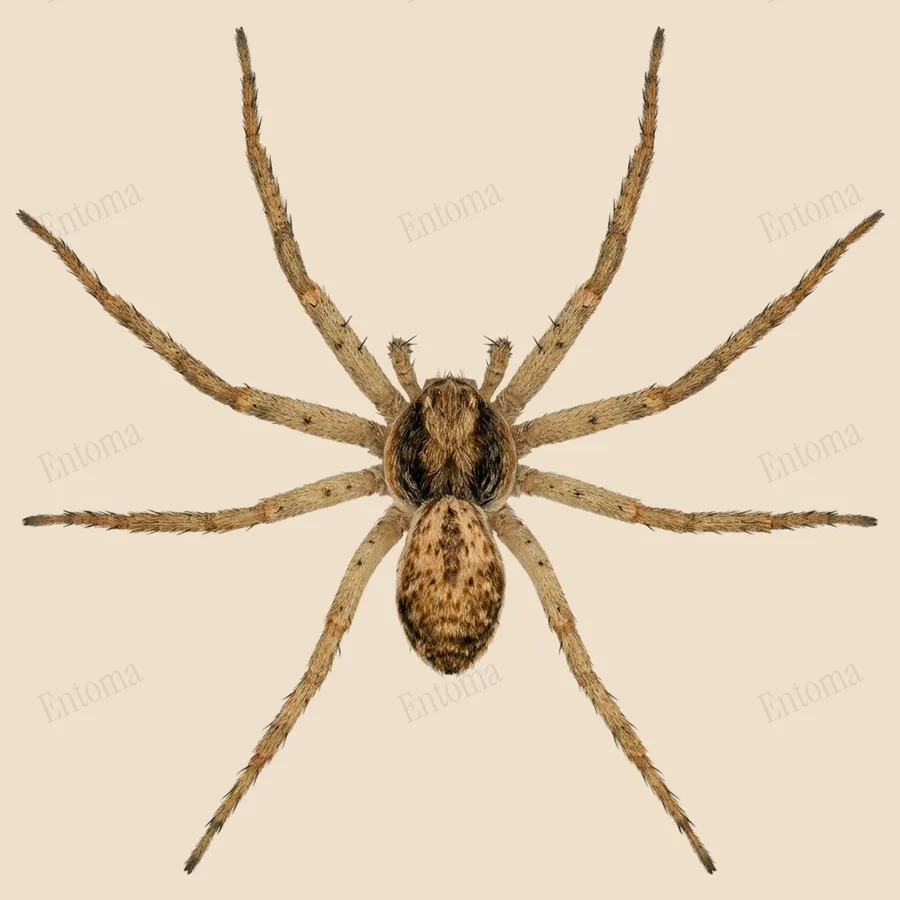
Eurasian running crab spider
Adult males are glossy black with pale margins while females stay yellow brown, making the two sexes of this crab spider easy to mistake for different species.
| Where | Tree trunks and bushes across Europe |
|---|---|
| Size | Female 4 to 6.1 mm, male 4 to 5 mm body length |
| When | March to September |
The Eurasian running crab spider shows striking sexual dimorphism. Males are shiny black or dark brown with a neat white border around the carapace and abdomen, while females are larger and plain yellow brown, closer in colour to other running crab spiders.
It builds no web, instead running down flies and other small insects on the bark and leaves of trees and bushes, pinning prey with its long front legs before biting.
Traits
Habitat
Garden
Colour
Black, White, Brown
Active
Day
To people
This small ambush hunter has no documented bite to people and poses no danger; it is usually noticed simply for the male's glossy black and white colouring.
Activity through the year
Often confused with
Similar size and habits, but the male Philodromus cespitum is brown or yellow and more heavily spotted, never the glossy black with white edges shown by male Philodromus dispar; females of the two look very similar and need close examination to separate.
Questions
Is the Eurasian running crab spider dangerous to people?
This small ambush hunter has no documented bite to people and poses no danger; it is usually noticed simply for the male's glossy black and white colouring.
When can you see the Eurasian running crab spider?
The Eurasian running crab spider can be seen from March to September, by day.
Plate retouched from a museum specimen photo by Staatliche Naturwissenschaftliche Sammlungen Bayerns, CC BY 4.0, GBIF Licence
Report a mistake in this entry
Spiders›Running crab spiders›Philodromus
Last updated 2026-09-27. Every entry is checked against published sources.