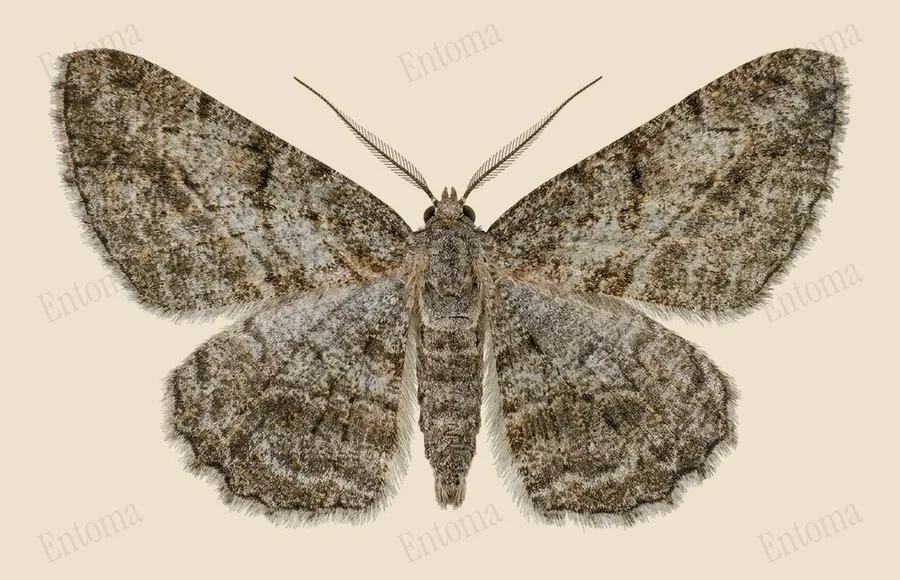
Willow beauty
Willow beauty caterpillars can eat both hawthorn leaves and ivy, letting the species breed successfully in gardens as well as ancient woodland.
| Where | Gardens, hedgerows, woodland edges |
|---|---|
| Size | 30 to 38 mm wingspan |
| When | May to September |
It is a variable brownish grey moth with darker cross-lines and a scalloped outer wing edge, though a greyish form and an almost black melanic form also occur.
Caterpillars feed on a wide range of deciduous trees and shrubs, including hawthorn and ivy, and the adults fly mainly in summer with an occasional second brood in warmer parts of its range during autumn.
Traits
Habitat
Garden
Colour
Brown, Grey
Active
Night
To people
Harmless.
Activity through the year
Often confused with
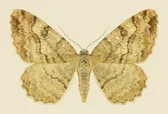
Mottled beauty has a more contrasting mottled pattern and a more sharply toothed outer edge to the forewing than the smoother-margined willow beauty.
Questions
Is the Willow beauty dangerous to people?
The Willow beauty is harmless to people.
When can you see the Willow beauty?
The Willow beauty can be seen from May to September, at night.
Plate retouched from a photo by Reinhold Möller Ermell, CC BY‑SA 4.0, Wikimedia Commons Licence
The plate on this page is shared under the same licence as its source, CC BY-SA.
Report a mistake in this entry
Butterflies and moths›Geometer moths›Peribatodes
Last updated 2026-09-26. Every entry is checked against published sources.