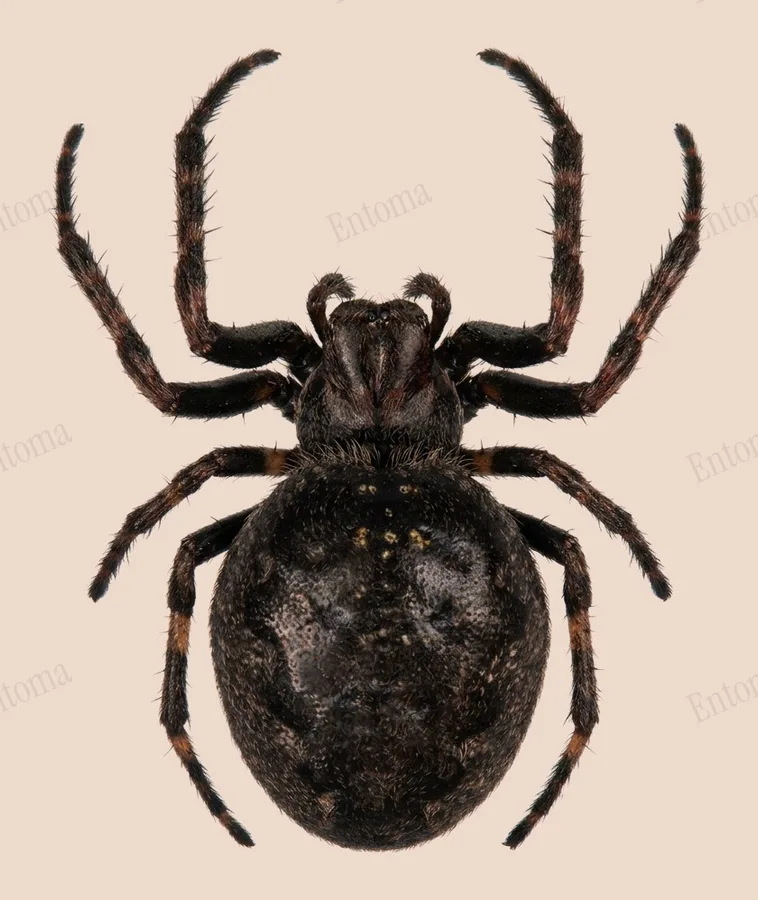
Walnut orbweaver
This flattened orb weaver hides by day under loose bark or in wall crevices so thin cracks conceal it completely, then builds a fresh web after dark.
| Where | Tree bark, fences and buildings |
|---|---|
| Size | Male 7.5 to 9 mm, female 11 to 16 mm body length |
| When | February to November |
Colour ranges from reddish brown to almost black, with a darker, leaf shaped pattern outlined in pale yellow across the flattened, oval abdomen; the flattened shape lets it squeeze into narrow cracks that hide it completely.
By day it hides in a crevice in bark or brickwork close to its web, then comes out after dark to build a fresh orb web and sits at its centre through the night, retreating again before daylight returns.
Traits
Habitat
Towns
Colour
Brown, Black, Green
Active
Night
To people
Mild
Bites to people are rare and usually cause only brief, mild pain that fades within minutes; a single unusual case from the 1970s involved stronger, longer lasting symptoms, but this remains an exception rather than the normal reaction.
Activity through the year
Often confused with
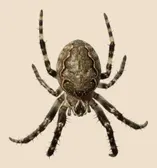
Also a flattened orb weaver found on man made structures, but it is grey with dark markings rather than the reddish brown to almost black abdomen with pale edged, yellow green leaf pattern of the walnut orbweaver.
Questions
Is the Walnut orbweaver dangerous to people?
Mild. Bites to people are rare and usually cause only brief, mild pain that fades within minutes; a single unusual case from the 1970s involved stronger, longer lasting symptoms, but this remains an exception rather than the normal reaction.
When can you see the Walnut orbweaver?
The Walnut orbweaver can be seen from February to November, at night.
Plate retouched from a museum specimen photo by Staatliche Naturwissenschaftliche Sammlungen Bayerns, CC BY 4.0, GBIF Licence
Report a mistake in this entry
Spiders›Orb-weaver spiders›Nuctenea
Last updated 2026-09-27. Every entry is checked against published sources.