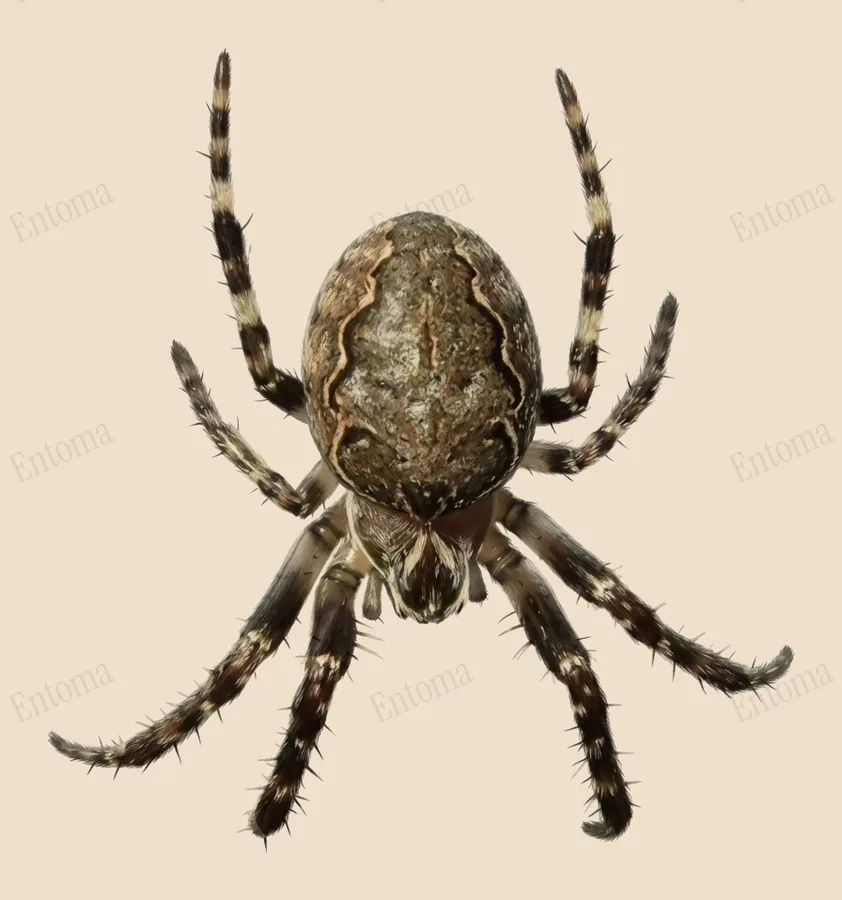
Grey cross spider
Females of this species actively choose brightly lit bridges and buildings to build their webs, since artificial lights draw far more flying insects into their threads.
| Where | Bridges, brickwork and steel near water |
|---|---|
| Size | Male 6 to 9 mm, female 10 to 19 mm body length |
| When | March to November |
The grey cross spider is a stout orb weaver, grey to grey-brown overall, with pale hairs outlining the head and a strongly white-margined pattern down the abdomen. Females measure 10 to 19 mm in body length and males a smaller 6 to 9 mm.
It builds its web on steel, brickwork and stonework rather than on plants, especially on bridges, quaysides and buildings close to water, and hides by day before waiting at the centre of the web after dark. Attracted to artificial lighting, it often gathers in dense colonies on well-lit structures where insect prey is most abundant.
Traits
Habitat
Towns
Colour
Grey, White
Active
Night
To people
Not known to bite people; large colonies sometimes form on lit bridges and buildings, but the spiders keep to their webs and pose no danger.
Activity through the year
Often confused with
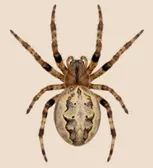
The furrow spider is usually found on waterside vegetation, meadows and forest edges rather than on built structures, while the grey cross spider favours bridges, brickwork and steel near water and is rarely seen on plants.
Questions
Is the Grey cross spider dangerous to people?
Not known to bite people; large colonies sometimes form on lit bridges and buildings, but the spiders keep to their webs and pose no danger.
When can you see the Grey cross spider?
The Grey cross spider can be seen from March to November, at night.
Plate retouched from a photo by Ilona, CC BY‑SA 4.0, iNaturalist Licence
The plate on this page is shared under the same licence as its source, CC BY-SA.
Report a mistake in this entry
Spiders›Orb-weaver spiders›Larinioides
Last updated 2026-09-27. Every entry is checked against published sources.