The white-point
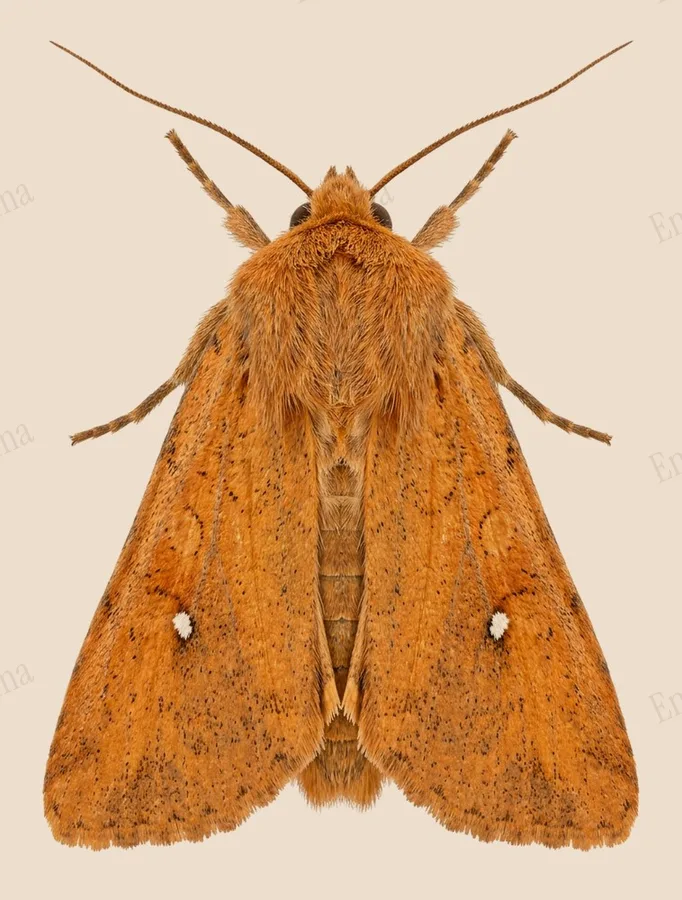
A single bright white dot near the wingtip gives this moth its name, and it has spread northward across Europe as a colonizing migrant in recent decades.
| Where | Grassland, farmland and open scrub |
|---|---|
| Size | 30 to 35 mm wingspan |
| When | May to October |
The White-point has pale orange-brown forewings with a small but conspicuous round white spot near the tip, a feature that stands out clearly even at rest and gives the species its common name.
Caterpillars feed on various grasses, and the moth is partly migratory, moving northward through Europe in most years to supplement resident populations that fly from late summer into autumn.
Traits
Habitat
Grassland
Colour
Orange, Brown, White
Active
Night
To people
Attracted to light; harmless to people.
Activity through the year
Often confused with
Larger at 35 to 40 mm wingspan and lacking the sharp white spot, with plain orange-brown forewings instead of the White-point's distinctive marking.
Questions
Is the The white-point dangerous to people?
Attracted to light; harmless to people.
When can you see the The white-point?
The The white-point can be seen from May to October, at night.
Plate retouched from a photo by David Short from Windsor, UK, CC BY 2.0, Wikimedia Commons Licence
Report a mistake in this entry
Butterflies and moths›Owlet moths›Mythimna
Last updated 2026-09-26. Every entry is checked against published sources.