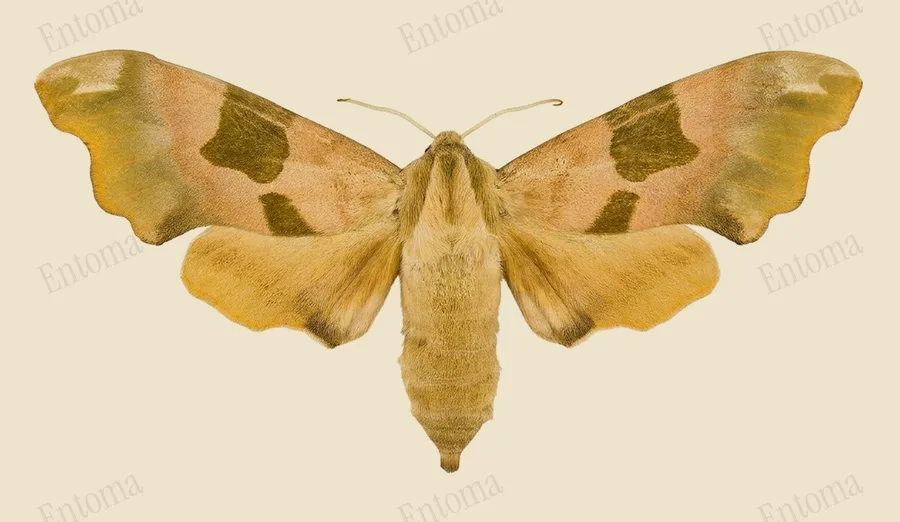
Lime hawkmoth
Its caterpillar changes from green to dull purplish grey days before pupating, then leaves the tree entirely to burrow into the ground.
| Where | Woodland, parks, and tree-lined streets |
|---|---|
| Size | 55 to 70 mm wingspan |
| When | April to August |
The forewing edge is deeply scalloped and coloured in soft washes of pink, green, and olive brown, with a variable dark central band that can shrink to a few disconnected patches.
Caterpillars feed on lime, birch, alder, and elm, and pupate underground rather than on the tree, overwintering as a pupa before adults emerge the following spring.
Traits
Habitat
Woodland
Colour
Green, Brown
Active
Night
To people
Harmless
Activity through the year
Often confused with
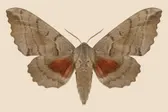
Poplar hawkmoth holds its hindwings pushed forward past the forewing edge at rest and lacks the lime hawkmoth's scalloped wing margin and pink-green wash.
Questions
Is the Lime hawkmoth dangerous to people?
The Lime hawkmoth is harmless to people.
When can you see the Lime hawkmoth?
The Lime hawkmoth can be seen from April to August, at night.
Plate retouched from a photo by Didier Descouens, CC BY‑SA 4.0, Wikimedia Commons Licence
The plate on this page is shared under the same licence as its source, CC BY-SA.
Report a mistake in this entry
Butterflies and moths›Hawk moths›Mimas
Last updated 2026-09-26. Every entry is checked against published sources.