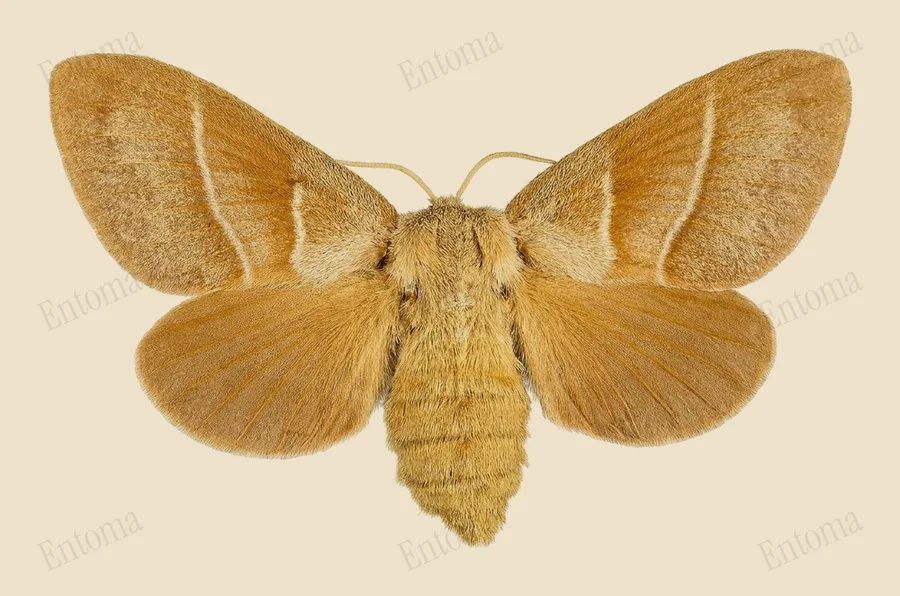
Fox moth
Males take to the wing by day searching for mates, while females of the same species fly only after dark.
| Where | Moorland, heathland, grassland, and hedgerows |
|---|---|
| Size | 40 to 65 mm wingspan |
| When | May to July |
Males are reddish brown while females are larger and greyer, and both sexes show two narrow pale yellow bands crossing each forewing.
Caterpillars are covered in dense blackish and tawny hairs and feed on heather and bramble among other low plants, growing rapidly through the summer.
Traits
Habitat
Heath
Colour
Brown, Yellow, Grey
Active
Day and night
To people
Mild
Harmless as an adult; the caterpillar's hairs can irritate skin if handled.
Activity through the year
Often confused with
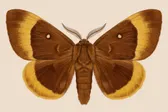
The oak eggar is larger, with a wingspan up to about 75 mm, and shows a distinct white spot near the center of each forewing that the fox moth lacks.
Questions
Is the Fox moth dangerous to people?
Mild. Harmless as an adult; the caterpillar's hairs can irritate skin if handled.
When can you see the Fox moth?
The Fox moth can be seen from May to July, by day and at night.
Plate retouched from a photo by Didier Descouens, CC BY‑SA 4.0, Wikimedia Commons Licence
The plate on this page is shared under the same licence as its source, CC BY-SA.
Report a mistake in this entry
Butterflies and moths›Lappet moths›Macrothylacia
Last updated 2026-09-26. Every entry is checked against published sources.