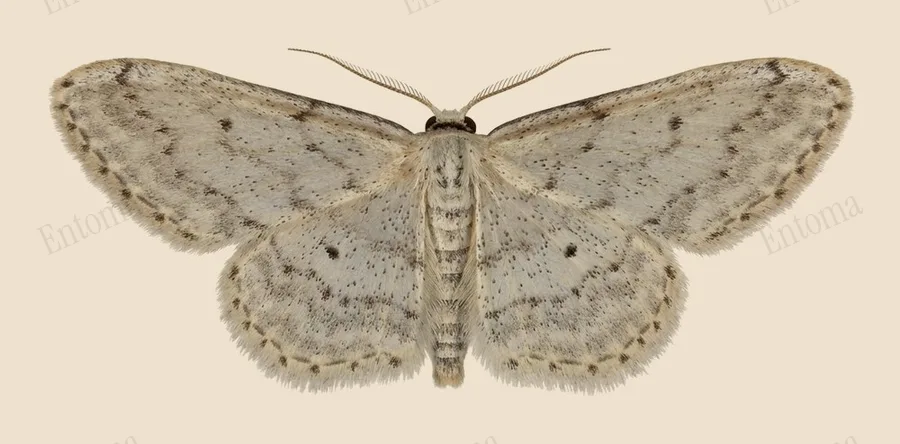
Small dusty wave
It is so plain and uniformly grey that it ranks among the least distinctively marked moths in its whole family.
| Where | Woodland edges, gardens, and wasteland |
|---|---|
| Size | 19 to 21 mm wingspan |
| When | May to September |
It is a small, nondescript grey moth with faint, indistinct crosslines and a single black discal spot on each forewing, giving the whole insect a dusty, uniform look.
Caterpillars feed on a range of low herbaceous plants, including ivy, and the species produces two generations in warmer regions but only a single generation further north.
Traits
Habitat
Garden
Colour
Grey
Active
Night
To people
Harmless
Activity through the year
Often confused with
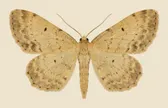
The single-dotted wave is smaller, at 13 to 18 mm wingspan, and shows warmer brownish-yellow tones, compared with the plain grey of the small dusty wave.
Questions
Is the Small dusty wave dangerous to people?
The Small dusty wave is harmless to people.
When can you see the Small dusty wave?
The Small dusty wave can be seen from May to September, at night.
Plate retouched from a photo by Zinnmann, CC BY‑SA 3.0, Wikimedia Commons Licence
The plate on this page is shared under the same licence as its source, CC BY-SA.
Report a mistake in this entry
Butterflies and moths›Geometer moths›Idaea
Last updated 2026-09-26. Every entry is checked against published sources.